
Markets


Fiscal Governance: Can Africa Avoid The Mistakes Of The West?
The ongoing debt and financial crises have exposed the dangers of the dysfunctional fiscal governance present in the U.S. and Europe. As African countries prepare to enter sovereign debt markets, they should heed the west’s “warning” – to handle fiscal...
The Emerging US-EU-Asia Trade Triangle: Balancing Opportunities & Threats?
After two decades of on-and-off talks, Washington and Brussels hope to conclude their trade and investment partnership. However, it is not a marriage, but a triangle drama. Emerging Asia is the third party. In his State of the Union address...

How Vietnam’s Burgeoning Civil Society Is Changing The Nation’s Political Landscape
Since 1976, Vietnam has been controlled by the Communist Party. Till recently, its rule and legitimacy had never been challenged. Recent civil movements however suggest that Vietnamese are gradually rising up against the party, hoping to transform the nation...

Two Visions: US and Chinese Rebalancing in Asia
As the momentum of economic growth is shifting from the transatlantic axis to Asia, both the United States and China are rebalancing their foreign policies in the region. However, as the recent APEC and ASEAN summits indicate, the way these...

The 3 Keys To Unlocking China’s Economic Prospects
How long can China sustain its economic growth? To figure this out, we first have to look at three important developments: How quickly will China be able to liberalise its capital markets; Whether China can move its economy away from...
Obama: Already A Lame-Duck President?
U.S. President Barack Obama first shot to global prominence in 2004 as a uniter, not a divider. But while most of the blame for Washington’s gross dysfunction will probably lie at the feet of the Republican right, that hates Obama...
The Erosion Of Foreign Investment In Europe
As advanced economies struggle with their debt crises, the typical drivers of growth – consumption, government, net exports – are ailing in many countries, particularly in Europe. As a result, many nations hope to rejuvenate their economies through investment. Last...

Can The US Shale Boom End America’s Great Stagnation? – Tyler Cowen Interview
America’s “Great Stagnation” first began in 1973, when both income and productivity started to show signs of slowing down. But thanks to the shale boom, the figures are once again on the rise and may continue to rise further. America’s...

The Rise Of Shanghai’s Free Trade Zone: Rebirth Of A Global Financial Hub?
In the 1920s, Shanghai was THE major centre of international trade and finance in East Asia. The position of the “Pearl of the Orient” though eroded with the turmoil of the 1930s. Shanghai’s new free trade zone however could restore...

Are Economic Growth Models Inherently Flawed?
Most economists today seem to think we can rely heavily on past patterns to forecast future growth. We however live in a finite world, so that even if growth can go on for a while, there are likely to be...
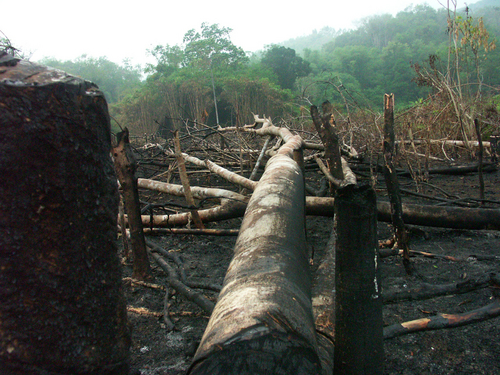
Indonesia Sets A Carbon Time-Bomb
Once a significant global carbon sink, Indonesia’s tropical peatlands now emit around 1 billion tonnes of CO2 a year, as a result of slash-and-burn techniques to clear land for oil, palm and paper plantations. And while the government has...

US-Europe Relations: Growing Apart?
The U.S.-Europe “friendship” helped shape the 20th century; but as Europe becomes increasingly fragmented – while showing greater divergence to American foreign policy, as demonstrated with the Syrian issue – does a strong transatlantic relationship still bear any significance in...

The US Shale “Boom”: A Fantasy Concocted By Politicians & Industry Bigwigs?
The numbers don't lie—but politicians and industry bigwigs do. While pundits still wax poetic about an era of American energy independence, Bill Powers, author of the book "Cold, Hungry and in the Dark: Exploding the Natural Gas Supply Myth," sees...
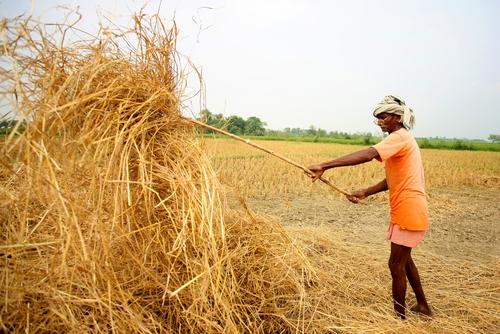
Are Global Agricultural Trade Policies Only Protecting The Developed World?
The agriculture sector is a large part of the developing world and supports the livelihoods of a significant portion of its population. But since the last WTO Doha Round, the developing world have been concerned that ambitious tariff reduction proposals...

Lessons From Japan: Why Economies Take Longer To Recover From Banking Crises
Since the 2008 financial crisis, economic recovery in the U.S. and Europe has been slow – sparking fears of long-term stagnation. Significantly, the experience of Japan in the 1990s have shown how even developed economies, which most would assume have...


