Alibaba Group’s Qwen AI App Blasts Past 10 Million Downloads in Debut Week

Please note that we are not authorised to provide any investment advice. The content on this page is for information purposes only.
Alibaba Group’s (NYSE: BABA) recently relaunched artificial intelligence (AI) application, Qwen, has achieved a remarkable milestone, surpassing 10 million downloads in just its first week of public beta availability.
This explosive growth positions Qwen as one of the fastest-growing AI applications globally, signaling the immense and unmet demand for sophisticated, locally developed AI tools in the Chinese market.
The momentum is largely attributed to the app’s relaunch and rebranding strategy, which saw Alibaba unify several existing AI offerings, including its “Tongyi” app, under the single, streamlined Qwen banner. This strategic consolidation, coupled with the absence of key Western competitors like ChatGPT in mainland China, has created a clear path for Qwen to dominate the nascent domestic consumer AI space.
Alibaba Rebranded Its AI App to Qwen
The Qwen app is powered by Alibaba Cloud’s cutting-edge Qwen family of open-source and proprietary large language models (LLMs). The app is designed to be a comprehensive personal AI assistant, offering a wide array of capabilities beyond a simple chatbot, including deep research and analysis, AI-assisted coding, camera, and voice-based features.
“Alibaba plans to deeply integrate core lifestyle and productivity services — including digital maps, food delivery, travel booking, office tools, e-commerce, education, and health guidance — directly into the Qwen App,” the company said in a statement.
The new Qwen app is designed to go far beyond simple conversational AI, with plans to evolve into an intelligent “AI agent.” The most significant change is the gradual introduction of “agentic-AI” features. This allows the AI to perform complex actions and complete multi-step tasks on behalf of the users. It can assist with online shopping on platforms like Taobao, including searching for products, providing personalized recommendations, and even making purchases. Future capabilities are envisioned to include complex tasks like scheduling a grocery delivery or finding the best deals for a specific item, all without constant user input.
By rebranding and streamlining the user interface, Alibaba aims to make Qwen the definitive one-stop AI platform for its mobile users, contrasting its previous approach of separate, more specialized apps.
Alibaba Has Doubled Down on AI
Alibaba’s CEO, Eddie Wu, has been driving an “AI-first” push, and Qwen is the most visible and successful evidence yet of this strategic shift towards embedding AI at the heart of the company’s consumer platforms.
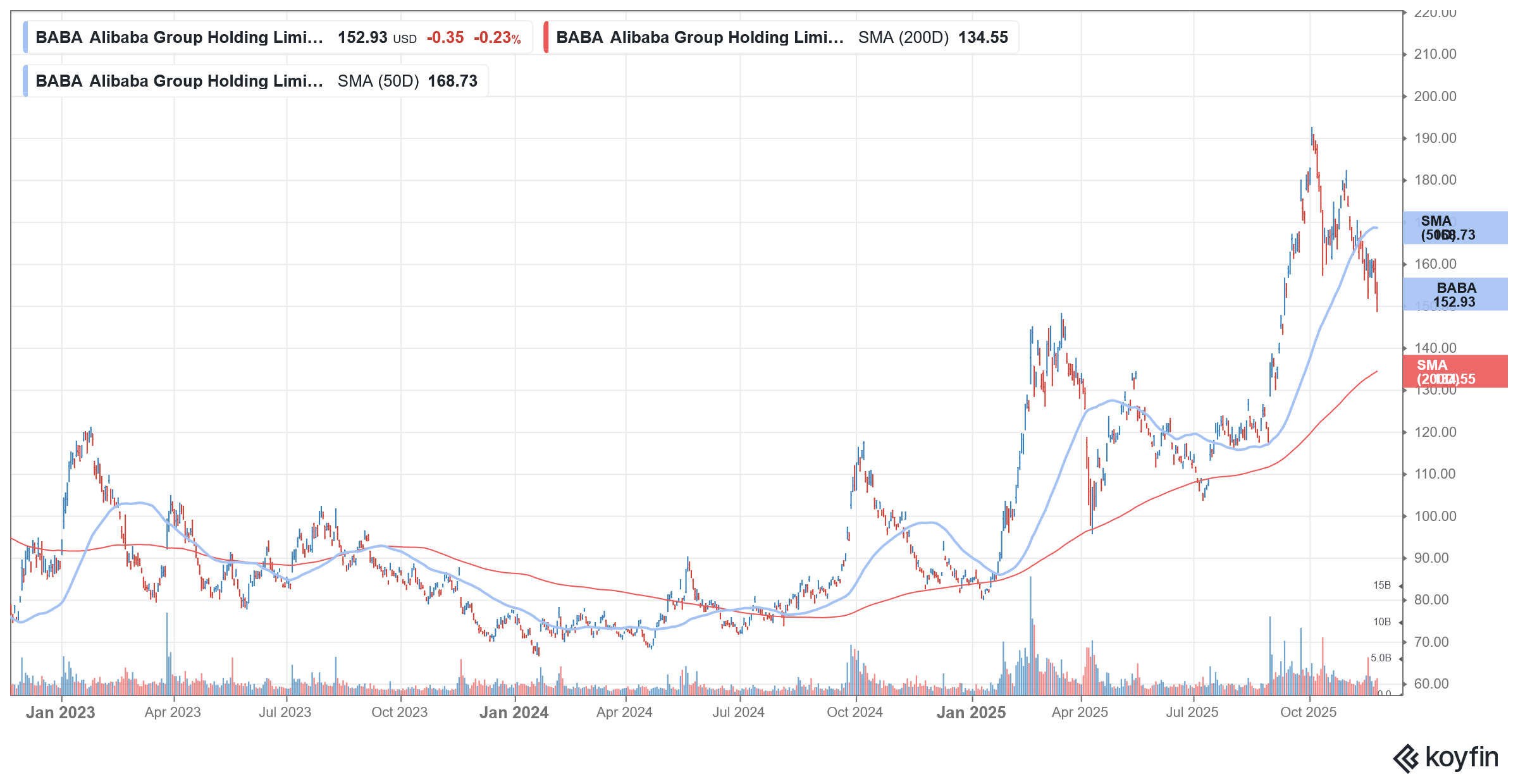
The spectacular debut has injected a significant dose of investor confidence, with Alibaba’s Hong Kong-listed shares climbing more than 5% following the announcement. Analysts view Qwen as a crucial step for Alibaba to compete effectively with global tech giants and potentially achieve a valuation more reflective of a leading AI enterprise.
Some industry observers are already dubbing Qwen as a potential candidate to become “China’s WeChat for the AI era,” echoing the revolutionary dominance that Tencent’s messaging app achieved in the mobile internet space.
Alibaba has stated that the Qwen app is currently being offered for free as it focuses on rapid user accumulation and product refinement. With plans already in motion for a global rollout under a different brand, the Chinese tech titan is clearly betting on Qwen to be its spearhead in the accelerating worldwide AI race.
“Whether or not they can leverage the Qwen app to drive their to-consumer business will be an important factor influencing the company’s future valuation,” said Kenny Ng, a strategist at China Everbright Securities International Co. He added, “The market also views this move as a crucial step for benchmarking it against the valuation of OpenAI.”
Alibaba Said That It is Seeing Strong ROI on AI Capex
Notably, while there have been concerns over tech companies’ ability to generate commensurate returns on their burgeoning AI capex last month, Alibaba said that it is seeing strong returns and is already breaking even on AI investments in its e-commerce business.
Alibaba vice president Kaifu Zhang, who heads the company’s e-commerce AI applications, told reporters in October that the company saw a 12% rise in advertising spend returns from AI-deployed tools, a “very rare” double-digit change that forecasts a “very significant positive impact” on the company’s Gross Merchandise Volume (GMV) during major shopping festivals.
Notably, last month, Alibaba said that it plans to hike its AI spending as the Chinese tech giant strives to solidify its position as a major player in the global AI landscape.
“The industry’s development speed far exceeded what we expected, and the industry’s demand for AI infrastructure also far exceeded our anticipation,” Alibaba’s CEO, Eddie Wu, told a developer conference in Hangzhou last month.
This bold move underscores Alibaba’s determination to solidify its position not only as an e-commerce giant but also as a comprehensive AI service provider. The company has declared artificial general intelligence (AGI) as its primary strategic objective, signaling a fundamental shift in its long-term vision.
BABA’s Cloud Segment Reported an Acceleration in Growth
Alibaba Cloud, which is the company’s cloud computing arm, showed strong momentum with revenues rising by 26% year-over-year in the June quarter, accelerating from the previous quarter. The company harped on the triple-digit year-over-year growth of its AI-related product revenue. It marked the eighth consecutive quarter of such growth, underscoring the strong market adoption of its AI solutions. The company will release its September quarter earnings tomorrow, where its cloud and AI business will attract an outsized attention.
Alibaba Allegedly Provided Support to PLA
Meanwhile, reports have surfaced alleging that Alibaba has provided technological support and customer data to the People’s Liberation Army (PLA) for operations targeting the United States. These claims, primarily sourced from a White House national security memo, have sparked a vigorous denial from the company and escalated geopolitical tensions over technology and data security.
Alibaba Group has vehemently denied the claims, labeling the report and the underlying memo as “completely false” and “complete nonsense.”
A spokesperson for Alibaba stated that “The assertions and innuendos in the article are completely false,” further questioning the motivation behind the anonymous leak, suggesting it was a “malicious PR operation” intended to undermine trade relations.
A spokesperson for the Chinese embassy in Washington also pushed back, calling the allegations a “complete distortion of facts.” They maintained that the Chinese government would “never require companies or individuals to collect or provide data located in foreign countries in violation of local laws.”
These allegations come amid long-standing and growing concerns in the US regarding China’s “military-civil fusion” strategy, which some US lawmakers argue requires Chinese companies to share technology with the military.
The dispute highlights the increasing scrutiny of Chinese cloud and AI firms, with US officials warning about Beijing’s potential ability to access or exploit sensitive American data through these vendors.
BABA Is Developing AI Chips
Alibaba is also developing AI chips, and last month it secured a major deal with state-owned telecom company China Unicom to supply AI chips for a new data center.
This partnership is particularly noteworthy in the context of the ongoing US-China technology standoff. The United States has imposed strict export controls on advanced AI chips, primarily targeting products from industry leader Nvidia, to prevent them from being used for military and national security purposes in China. This has created a vacuum in the Chinese market and spurred domestic companies to accelerate their own chip development.