Norway’s Sovereign Wealth Fund to Reject Musk’s Mammoth Tesla Pay Deal

Please note that we are not authorised to provide any investment advice. The content on this page is for information purposes only.
Norges Bank Investment Management (NBIM), which manages Norway’s colossal Government Pension Fund Global, has announced its decision to vote against a proposed compensation package for Tesla CEO, Elon Musk, that could be valued at up to $1 trillion.
The move represents a powerful stance against what it views as excessive executive pay, despite acknowledging the tremendous value Musk has created for the company.
“While we appreciate the significant value created under Mr. Musk’s visionary role, we are concerned about the total size of the award, dilution, and lack of mitigation of key person risk- consistent with our views on executive compensation,” said NBIM, the world’s biggest sovereign wealth fund said in a statement.
NIBM to Reject Musk’s Tesla Pay Package
It, however, added, “We will continue to seek constructive dialogue with Tesla on this and other topics.”
NBIM’s rationale for rejecting the record-breaking pay deal, ahead of a crucial shareholder meeting, centers on three core concerns. These are.
- Total Size of the Award: The fund expressed significant alarm over the sheer magnitude of the proposed award. While tied to extremely ambitious performance milestones (including reaching an $8.5 trillion market capitalization), the potential value of the stock grant is unprecedented in corporate history.
- Shareholder Dilution: The compensation package, if fully realized, would grant Musk an additional large percentage of Tesla’s stock, which would dilute the ownership percentage of existing shareholders like NBIM.
- Lack of Mitigation of Key Person Risk: NBIM cited concerns over the lack of measures to mitigate “key person risk.” This refers to the company’s over-reliance on a single individual, Musk, and the risks posed to the company’s value should he leave or be unable to perform his duties. The fund argues that a package of this size does little to diversify this risk or establish a strong succession plan.
NIBM Rejected Musk’s Previous Pay Package Also
This opposition is not new ground for the Norwegian fund, which is Tesla’s seventh biggest shareholder, owning over 1% stake. NBIM previously voted against an earlier, massive $56 billion pay package for Musk, which was approved by shareholders but later rescinded by a Delaware court.
The fund’s consistently critical stance on executive pay is deeply rooted in its responsible investment mandate. As a steward of the Norwegian public’s oil wealth, NBIM often adheres to strict corporate governance principles, advocating for fair and sustainable compensation practices across its portfolio of thousands of global companies.
Teala to Hold Shareholder Meeting This Month
The Norwegian fund’s announcement comes just days before Tesla’s annual shareholder meeting, where the pay package is the most contentious item on the agenda. The board and some supporters, like Baron Capital, argue that the compensation is essential to retain Musk and incentivize him to achieve the company’s ambitious future goals, particularly in areas like AI and robotics.
Advisory Groups Have Called Upon Shareholders to Reject Musk’s Compensation
However, NBIM is not alone in its opposition. Influential shareholder advisory groups, including Institutional Shareholder Services (ISS) and Glass Lewis, have also recommended that investors vote against the deal, citing similar concerns about the value and corporate governance.
Musk Lashed Out at Advisory Firms
During the Q3 2025 earnings call last month, Musk reiterated his previous comments and said that he is not comfortable building a “robot army” at Tesla as he could be voted out on “recommendations from ISS and Glass Lewis,” who he added have “no freaking clue” while terming them “corporate terrorists.”
Musk added, “You’ve got passive funds that essentially defer responsibility for the vote to Glass Lewis and ISS, then you can have extremely disastrous consequences for a publicly traded company if too much of the publicly traded company is controlled by index funds. It’s de facto controlled by Glass Lewis and ISS. This is a fundamental problem for corporate governance because they’re not voting along the lines that are actually good for shareholders.”
Tesla Board Has Urged Shareholders to Approve Musk’s Pay
Tesla chair Robyn Denholm has asked shareholders to vote for the $1 trillion compensation that the board has recommended for Musk, failing which he might not stay with the company.
In her letter, Denholm said that Tesla is at a “critical inflection point,” and stressed that the key question for shareholders is whether they “want to retain Elon as Tesla’s CEO and motivate him to drive Tesla to become the leading provider of autonomous solutions and the most valuable company in the world?”
“She added, “When negotiating this performance award, we necessarily considered what Tesla’s future without Elon would look like, and we did not believe it was the future that our shareholders deserve.”
Tesla Is Pivoting to AI
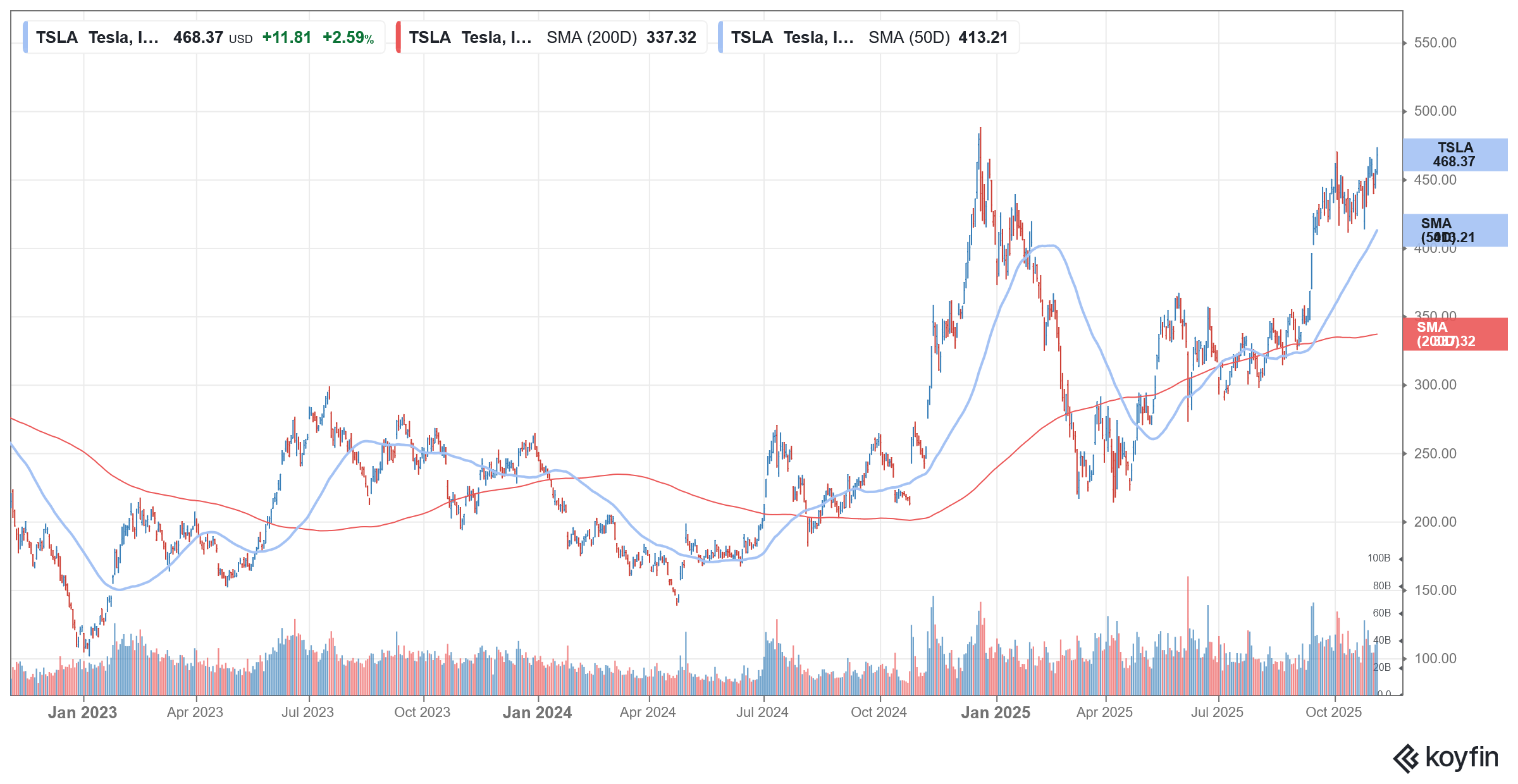
Notably, Tesla has been pivoting to artificial intelligence (AI) products like autonomous driving and humanoids. Musk has said several times that these products will drive the real value for Tesla shareholders.
While previously Musk said that Tesla would be more than the combined worth of Apple and Saudi Aramco, he has since been making even bolder predictions, and last year said that the company’s Optimus humanoid would make it a $25 trillion company. However, many Wall Street analysts don’t share Musk’s optimism and see the stock as highly overvalued.
In her letter, Denholm said, “At a time when companies—both big and small—are competing to be the first to bring groundbreaking AI technologies to market, we could not risk losing the best leader in the industry to put Tesla on top. Now is a pivotal moment for our company to emerge as a leader in AI, and with our exceptional CEO at the helm, we are perfectly positioned to seize it.”
Notably, while Tesla is positioning itself as an AI company, the company’s core automotive business has sagged, with sales expected to fall for the second consecutive year. While the company reported a yearly rise in Q3 deliveries, the rise came due to the expiration of the EV tax credit in the US. The company’s sales woes seem to be back in Q4, with sales of China-made cars falling by 9.9% year-over-year in October.