Tesla Chair Says Company Could Lose Musk If His $1 Trillion Compensation Is Not Approved

Please note that we are not authorised to provide any investment advice. The content on this page is for information purposes only.
Tesla chair Robyn Denholm has asked shareholders to vote for the $1 trillion compensation that the board has recommended for CEO Elon Musk, failing which he might not stay with the company.
In her letter, Denholm said that Tesla is at a “critical inflection point,” and stressed that the key question for shareholders is whether they “want to retain Elon as Tesla’s CEO and motivate him to drive Tesla to become the leading provider of autonomous solutions and the most valuable company in the world?”
Tesla Chair Calls Upon Shareholders to Approve CEO Compensation
“She added, “When negotiating this performance award, we necessarily considered what Tesla’s future without Elon would look like, and we did not believe it was the future that our shareholders deserve.”
Notably, Tesla has been pivoting to artificial intelligence (AI) products like autonomous driving and humanoids. Musk has said several times that these products will drive the real value for Tesla shareholders.
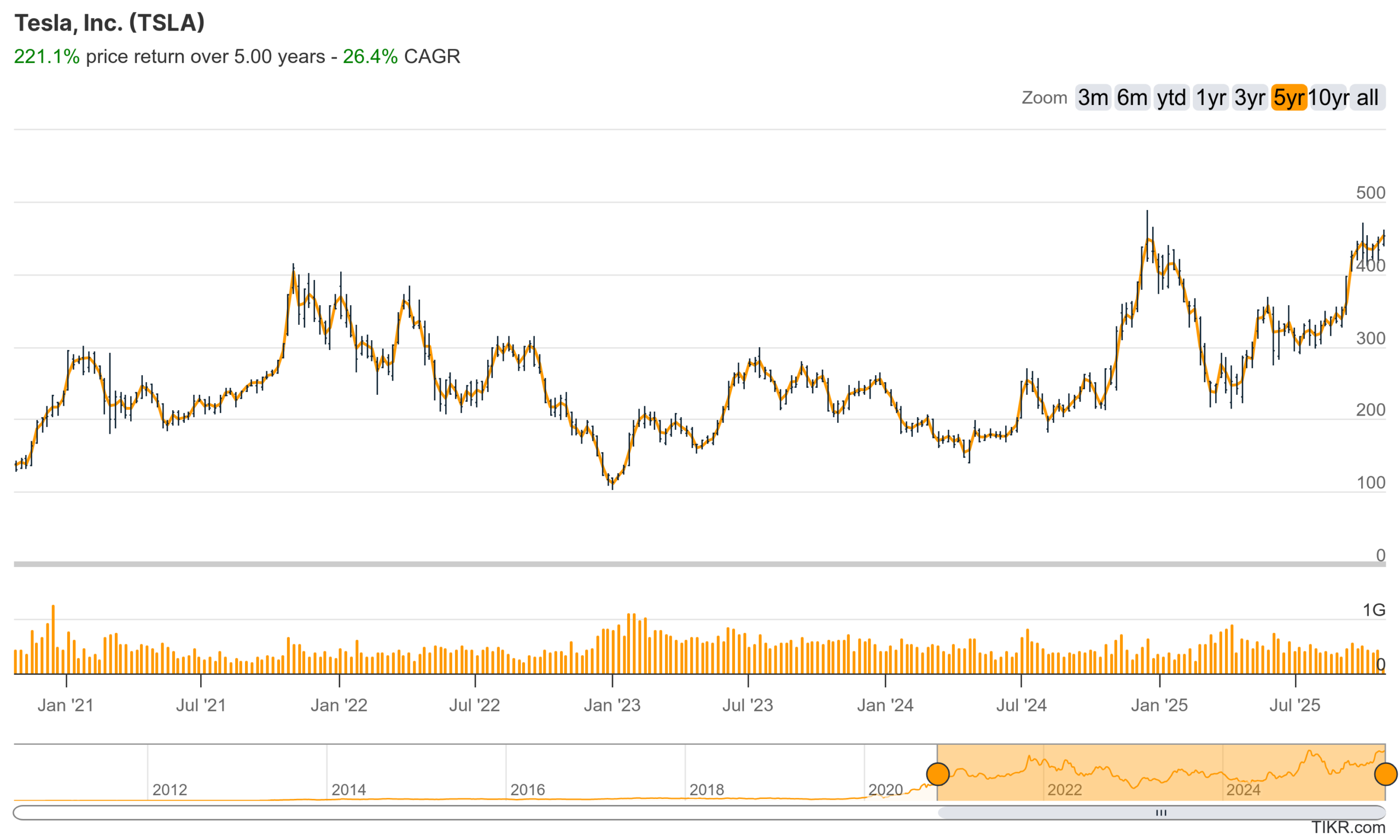
While previously Musk said that Tesla would be more than the combined worth of Apple and Saudi Aramco, he has since been making even bolder predictions, and last year said that the company’s Optimus humanoid would make it a $25 trillion company. However, many Wall Street analysts don’t share Musk’s optimism and see the stock as highly overvalued.
Tesla Is Positioning Itself as an AI Company
In her letter, Denholm said, “At a time when companies—both big and small—are competing to be the first to bring groundbreaking AI technologies to market, we could not risk losing the best leader in the industry to put Tesla on top. Now is a pivotal moment for our company to emerge as a leader in AI, and with our exceptional CEO at the helm, we are perfectly positioned to seize it.”
Notably, while Tesla is positioning itself as an AI company, the company’s core automotive business has sagged, with sales expected to fall for the second consecutive year.
Breakup of Musk’s Compensation
Musk’s compensation would be in the form of stocks and linked to several milestones that must be met over the next 10 years. These include
- Market Capitalization: Tesla’s market value, currently around $1.1 trillion, would need to skyrocket to at least $8.5 trillion for Musk to unlock the full payout.
- Vehicle Production: The company must achieve an annual vehicle delivery rate of 20 million, a nearly tenfold increase from its current levels.
- Robotics and AI: The plan includes targets for the deployment of 1 million “robotaxis” and 1 million of the company’s humanoid “Optimus” robots.
- Profitability: Financial goals are equally aggressive, with adjusted EBITDA needing to increase from approximately $17 billion to $400 billion.
The compensation would be awarded in a series of tranches, with each payout contingent on a combination of market capitalization and operational milestones. To receive any of the shares, Musk would need to remain with the company for at least 7.5 years, with the full package requiring a 10-year commitment
If approved by shareholders, the plan could increase Musk’s ownership stake in Tesla to over 25%, significantly consolidating his control over the company. Notably, in a post on X in January 2024, Musk said that “I am uncomfortable growing Tesla to be a leader in AI & robotics without having ~25% voting control. Enough to be influential, but not so much that I can’t be overturned.”
Musk Has Said That He Needs Higher Voting Rights At Tesla
During the Q3 2025 earnings call earlier this month, Musk reiterated his previous comments and said that he is not comfortable building a “robot army” at Tesla as he could be voted out on “recommendations from ISS and Glass Lewis,” who he added have “no freaking clue.”
Musk added, “You’ve got passive funds that essentially defer responsibility for the vote to Glass Lewis and ISS, then you can have extremely disastrous consequences for a publicly traded company if too much of the publicly traded company is controlled by index funds. It’s de facto controlled by Glass Lewis and ISS. This is a fundamental problem for corporate governance because they’re not voting along the lines that are actually good for shareholders.”
In its statement to CNBC, Glass Lewis said, “Our job as a proxy advisor is to provide informed analysis and recommendations to our clients worldwide. Those that are Tesla shareholders will ultimately make their own decisions about Mr. Musk’s pay proposal and the Board directors that put it forward for shareholder vote.”
Is Musk Spending Enough Time At Tesla?
Critics have also slammed the Tesla board for failing to secure a higher time commitment from Musk despite offering him generous compensation.
Musk has formed a new political party after his bitter feud with President Donald Trump. Notably, Musk headed Trump’s Department of Government Efficiency (DOGE) until May and was tasked with eliminating “wasteful” government expenses. However, the bonhomie between Musk and Trump ended shortly after the world’s richest person left the White House.
Musk Has Expanded His Political Activities
Musk’s expanding his political activity with the new party is also making markets apprehensive about the billionaire’s ability to devote adequate time to Tesla. Such concerns have been around for quite some time, as apart from Tesla, Musk also heads several other companies like SpaceX and Neuralink. Of late, he has added X and his AI startup xAI to the ever-growing list of companies that he owns.
Notably, one of the reasons critics slam Musk’s multi-billion-dollar compensation package is that, despite the mammoth package, which was the largest in US corporate history, the Tesla board failed to get a commitment from Musk to spend more time at the company.
In her letter, Denholm admitted to Musk’s other commitments and said, “Though it’s no question that Elon has other pursuits, he has proven that one of the many things that make him unique is his ability to stretch his capacity beyond normal limits and remain successful at Tesla.”
She, however, added, “However, if we fail to foster an environment that motivates Elon to achieve great things through an equitable pay-for-performance plan, we run the risk that he gives up his executive position, and Tesla may lose his time, talent and vision, which have been essential to delivering extraordinary shareholder returns.”