
Canadian Economy Takes a Hit from Low Oil Prices


TD Bank predicts the Canadian economy will shrink in 2015 because of low oil prices. According to the report, the effects will be noticeable in the first few quarters, but growth expects to pick up in late 2015.

The report basis is about the prediction that oil prices will fall to $40 a barrel and then rise to around $65 a barrel for 2016. TD further notes that annual growth will be 1.9 percent in 2015, which is a downgrade from a forecasted two percent during January. The Bank of Canada predicted slightly less than 2.1 percent growth.

China’s Infrastructure Investment Bank


Asian Infrastructure Investment Bank (AIIB) has been much in news ever since China showed interest in forming a bank that focused on infrastructure projects in the Asian region. Established in 2014, the Asian lending institution has a target of $100 billion in registered capital with China having most of its initial $50bn in capital. With many European nations supporting the new bank, the US is raising concerns over the bank citing issues related to the bank’s standards of governance and environmental and social safeguards.

Singapore’s Lee Kuan Yew was a Man with a Mission


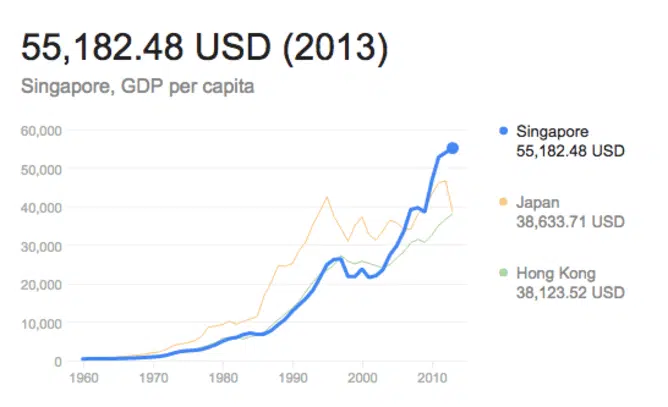
Lee Kuan Yew, the founding father of one of Asia’s smallest but most developed economies, has died. Lee led Singapore after its separation from Malaysia to emerge as one of the world’s most powerful financial centres.

The tiny nation, whose main industry was manufacturing at independence, saw its GDP per capita skyrocket under Lee to one of the highest in the world in 2013, behind just oil-rich Qatar and private banking centre Luxembourg, according to the IMF. Its population has doubled to more than 5m.

Published
Categorized as Singapore

Measuring Xi Jinping’s Economic Reforms by Competition and Productivity


The usual assessment of Xi Jinping’s performance as China’s leader goes like this: since taking the reins at the end of 2012, he has over-delivered on anti-corruption and underwhelmed on economic reform.

Published
Categorized as China

Is Slowing Chinese Economic Growth Gaining Momentum?


China’s manufacturing shrank in March, adding to the mounting evidence that China’s economy may be stalling and cooling off much more quickly than previously predicted.

According to a report by ABC News, China’s manufacturing activity did not just slow, but it actually shrank in March. The HSBC/Markit Flash China Manufacturing Purchasing Managers’ Index (PMI) issued a report noting an 11-month low of 49.2 in Chinese factory activity for March. Anything below a mark of 50 indicates contraction, while 50 and above indicates sector growth.

Scottish Economy Takes Sharp Downturn but a Rebound is Expected


A report from the Bank of Scotland noted that Scotland’s economy slowed heavily in the first few months of 2014, but expects additional growth over the next few months. Bank of Scotland economist Donald MacRae notes that the economy slumped in the beginning of 2015, but expects stabilized growth to return sometime in the spring.

A World Economy Top 10


The market continues to search for a new range post-FOMC with a mixed dollar.  The relentless rise of the dollar has been broken with the help of a softer US rate environment.  The seemingly relentless push of the euro toward parity stopped in its tracks.  The long overdue technical correction in the dollar may have more room to run. 

Ten things that you should know today: 

Published
Categorized as Markets

Can ‘Business as Usual’ Continue to Work for the U.S. in Asia?


The United States has dominated global economics and finance in the post-war era. But the rise of new regional institutions and agreements in Asia will pose a growing and lasting competitive challenge to US leadership in the Pacific.

To adapt and compete, American strategy must reflect a clear understanding of the depths and origins of change in Asia. The US cannot compete in either geopolitics or business unless it understands the sources of its competition in the first place.

Maritime Disputes and Vital Trade Routes Define Asian Waters


Some are calling for a new institution to manage Asia’s maritime disputes.

‘The physical contours of East Asia’, leading geopolitical analyst Robert Kaplan recently wrote, ‘argue for a naval century’. Given the significance of the maritime realm in the region — which is the source of rich energy resources and vital maritime trade routes, as well as raging territorial disputes in the East and South China Seas — few would disagree.

How the Philippines Ended Up in the Top 10 in Gender Equality


The Philippines ranked ninth out of 142 countries in terms of gender equality, according to the recent World Economic Forum (WEF) Global Gender Gap Report 2014. As one of the top 10 countries, the Philippines keeps company with high-income Nordic countries, such as Finland, Norway, Sweden, and Denmark. Perhaps surprisingly, several low-income countries such as Nicaragua and Rwanda also made the top 10.