
ASEAN Would Benefit from Indonesia’s Leadership


ASEAN would benefit from stronger leadership however, Indonesia, the country best placed to take up that role, appears unwilling.  Indonesia could be the leader that ASEAN needs, but it intentionally refrains from asserting its influence over the association.

This is due to Indonesia’s internal weaknesses, ASEAN’s norms of non-interference and equality among members, and the remaining antagonism among ASEAN member countries. This situation leaves a power vacuum within the association and intensifies the academic debate about leadership in integrating regions.

Correlation Shifts Between Currencies and Equity Indices


The divergence meme that had the US well ahead in the global business cycle produced a virtuous cycle.  The dollar and US stocks rallied together.   However, with the dollar’s appreciation spurring concern about US corporate earnings, and the negative interest rates in Europe spurring flows into equities, correlations between the dollar and equity markets shifted again and that is one of the important themes here in Q1.

Published
Categorized as Markets

A Look at the Week in the Emerging Markets


EM currencies are starting the week under pressure again from a broad based dollar recovery. While expectations for a Fed lift-off remain in flux, the recent rebound in the dollar suggests that on a relative basis, the US economic and interest rate outlooks remain attractive.

Weak Economic Growth in South Korea


Many know South Korea as one of the strongest economies in East Asia. They think of the wide array of Korean products in the electronics and auto markets as proof of this concept. In truth, the South Korean economy is crawling forward, raising concerns for both government officials and investors.

Fiji’s Latest Voting Generation has Survived Four Coups Since 1987


The ‘coup babies’ are the generation that were born around the years before and shortly after Fiji’s first coup of 1987. The majority of this generation voted for the first time in Fiji’s 2014 elections, after living through two coups in 1987, one in 2000 and a fourth in 2006.

Published
Categorized as Fiji

Could a Slowing Chinese Economy Lead to Regional Divergences?


Despite China’s history of experimenting with new policies and the economic liberalisation since the late 1980s, China is still only a partially integrated economy. This has caused regional divergence and inequality. Now, as the Chinese economy begins to slow down, prospects of further regional divergence are troubling and have a greater chance of exacerbating political tensions.

Published
Categorized as China

Australia’s Current Economic Relationship with its Bond Yields


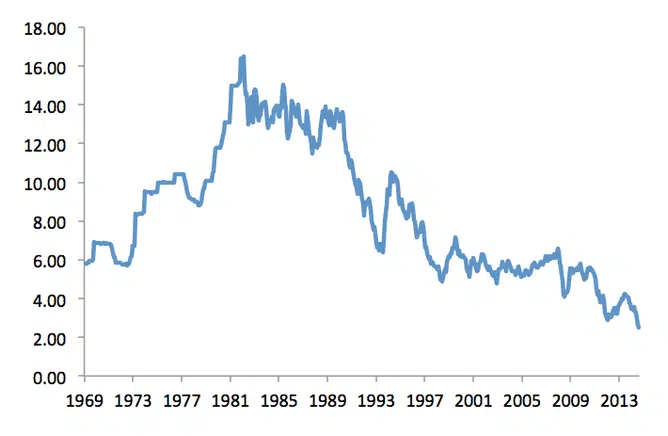
When the Australian Office of Financial Management borrowed A$4.25 billion for 20 years at an interest rate of just 2.865% this week, economic commentator Peter Martin called it “the deal of the century”.

Governments issue bonds to raise funds to pay for general expenses and projects such as the development of infrastructure. Investors buy government bonds from the governments that issue them. In return, as bondholders, they typically receive periodic interest payments (known as the coupon), in addition to repayment of the principal when the bond matures.

Published
Categorized as Australia

East Africa mirrors West Africa’s Challenges to Impact Investing


Gaining momentum since 2006, the impact investing concept is now 9 years old but it is yet to be well established in many emerging markets including East Africa. As opposed to the maturity expected of an industry after such a long period of time, this particular sector is still nascent in the region according to a report by Global Impact Investing Network (GIIN). The impact investing industry is facing a number of challenges both from the supply side (impact investors) and the demand side (local entrepreneurs) that are delaying its growth within the region.

Published
Categorized as Africa

Japan has been Quietly Opening the Door to Increased Immigration


With the foreign population in Japan expected to grow in the future, policymakers have an interest in promoting a more positive view of immigration. Current public opinion toward immigration in Japan, like in much of the rest of the world, is generally negative. But recent public opinion data shows that individuals who are more likely to come in contact with foreigners or who self-assess as being of high English speaking proficiency are more supportive of increases in immigration.

Published
Categorized as Japan

Are China’s Corporate-Political Connections Undermining its Stock Market?


Political connections are invaluable to industries or individual enterprises in China. But while they may bring regulatory benefits to private-owned enterprises during the state-controlled process of going public, they may also lead to China’s stock markets performing poorly.

China’s stock markets are fundamentally different from other major stock markets around the world. Ever since their establishment in late 1990, the process of going public in China is under tight government control. China’s stock market regulations have been under a merit-review regime.

Published
Categorized as China