
China’s Markets Reopen Tomorrow


China’s markets closed at the end of September and re-open tomorrow. It is interesting to note what has happened in the global capital markets in the interim. The US dollar has fallen against all the major currencies, but the Japanese yen, which is off about 0.2%. Major equity markets are 3%-5% higher. US and Germany benchmark 10-year bond yields are up about 3 bp, though UK gilt yields are up 9 bp, with half of this gain being recorded today. Many industrial commodity prices are higher, with the price of Brent up a little more than 9%, and the CRB index is up 4%.  
Published
Categorized as Markets

How Did Malaysian Manufacturing Fall So Far Behind?


Malaysia’s manufacturing sector is reversing to a state reminiscent of its post-colonial stage of development. Regrettably, this situation was avoidable.

When the Federation of Malaya gained independence from Britain in 1957, economic conditions were ripe for rapid and sustained growth. Its primary export sector was showing immense potential for expansion. Primary commodities — particularly tin ore and natural rubber — accounted for a third of Malaysia’s GDP and over 75 percent of exports by 1970, a legacy of its colonial past.

Published
Categorized as Malaysia

Britain’s Economy Continues to Struggle


According to Reuters, Britain’s economy suffers from an unstable world market and lower consumer spending. Manufacturing capacity decreased as well, especially in major sectors of the economy. In light of the grim news, economists do not expect the Bank of England to raise interest rates in the short-term.

Japan’s Energy Efficiency is Changing its Energy Mix


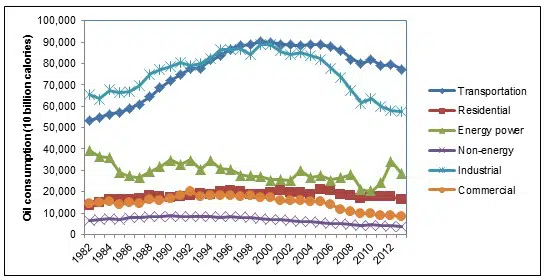
Japan is almost fully dependent on energy imports. In March 2011, a devastating earthquake and tsunami hit eastern Japan and damaged the nuclear power plant in Fukushima. This disaster led to the shutdown of all nuclear power plants due to the lack of government safety approvals. Japan replaced this significant loss of nuclear power with energy generated from imported natural gas, low-sulfur crude oil, fuel oil, and coal.

Published
Categorized as Japan

The Reserve Bank of India Surprises by Slashing the Repo Rate


The decision of the Reserve Bank of India (RBI) to slash the repo rate (the rate at which the RBI lends to commercial banks) by 50 basis points (bps) has surprised many. The RBI governor, Raghuram Rajan, had previously taken baby steps to reduce interest rates, focusing strictly on inflation. Now the repo is at 6.75 percent, the level of 2011, down from 8 percent at the start of 2015. Both the domestic and external economic environment warranted big steps by the RBI to induce economic growth.

Published
Categorized as India

Can a Rapidly Aging Singapore Stave Off Economic Disaster?


According to United Nations World Population Prospects 2015, Singapore will become a super-aged society by 2026. By then, one in five people in the country (or 1.25 million) will be aged 65 or above. The median age will exceed 44.9, up from just 18.1 in 1965. When Singapore gained independence in 1965, just 2.65 percent of the population (or 49,757) were aged 65 or above.

Published
Categorized as Singapore

Is the Tone in Emerging Markets Taking a Positive Turn?


EM is starting the week on a positive footing.  Aside from the recovery in global risk appetite, the uptick in commodity prices and the broader weaker tone in the dollar, we think the price action in Brazil has helped EM more generally.  In our view, the (relatively) positive news flows and the subsequent strong rally in all asset classes has helped to change the tone for EM.  The question is whether it can last (a question we will address in an upcoming report).  While it is far too early to say that EM has turned a corner, it looks as if we are reaching a more mature s

European Stocks Gain, Emerging Markets Lose Cash


Stocks in Europe rose Monday morning, while emerging markets capital losses continue in the wake of falling commodity prices and lowered growth expectations.

The rise in stocks in Europe was largely due to weak economic data, which has fueled expectations of an increased quantitative easing program from the European Central Bank. ECB President Mario Draghi has recently hinted that the central bank’s current stimulus program, which purchases over $1 trillion of bonds in public markets, may extend to encourage inflation.

Europe’s Low Growth

How to Move 10 Million People


According to the central Chinese government, solving rural poverty and environmental degradation problems will require resettling more than 10 million citizens by 2050. This number does not include the 7 million people that have already been resettled over the last 30 years or so.

Published
Categorized as China

China’s President Xi is Just Getting Started


The recent Washington summit took the US-China bilateral relations onto a new level, while President Xi’s UN visit gave a glimpse of China’s new global role.

The current characterization of the U.S.-China bilateral relations are very different trajectories of power. As President Barack Obama is on his way out, President Xi Jinping is just getting started. In turn, the U.S. presidential election cycle, particularly its aggressive rhetoric, may cast shadows over bilateral progress.

Published
Categorized as China
