
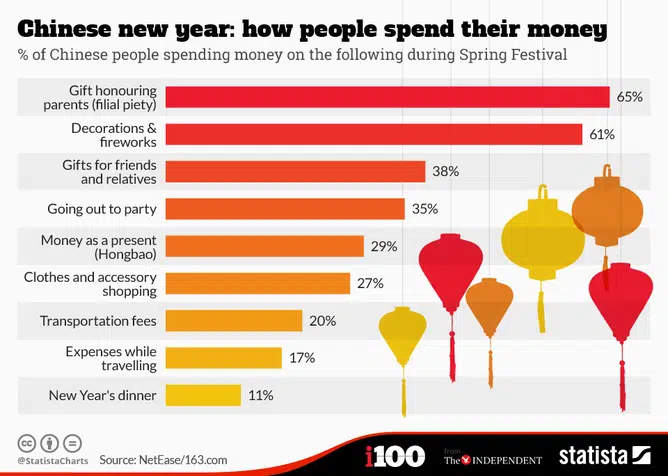
All Chinese New Year Celebrations are not Created Equal


One of the biggest annual celebrations around the world is upon us. February 8 marks the start of the Lunar New Year in China. Also known as the Spring Festival, it is the most important holiday in the Chinese calendar, akin to Christmas in the West. An important time of family reunions and catching up with old friends, it is also a huge consumer holiday, as people usher in the year of the monkey.

Published
Categorized as China

Food Scarcity a Top Campaign Issue in the Philippines


The Philippine presidential campaign period officially begins on 9 February. But amid the same old spiels about political piety, not one of the five presidential candidates — current Vice-President Jojo Binay, Senator Miriam Defensor-Santiago, Mayor Rodrigo Duterte, Senator Grace Poe and Secretary Mar Roxas — has raised the most pressing issue facing the Philippines, the country’s massive population.

Balance of Payments Out of Balance? See Errors and Omissions


Chinese markets will be closed next week for the Lunar New Year celebration.  However, over the weekend, China will report its January reserve figures.  The market suspects that the PBOC burnt through another $120 bln of reserves. 

China’s reserves stood at $3.81 trillion in January 2015.  There are expected to stand near $3.21 trillion as of the end of last month.  

Published
Categorized as China

An Emerging Markets Status Update


1) China relaxed some rules on foreign capital flows, 2) Malaysian Prime Minister Najib is tightening his grip on power, 3) The Czech National Bank (CNB) has tilted more dovish, 4) Ukrainian Economy Minister Abromavicius resigned abruptly, throwing the ruling coalition into turmoil, 5) Argentina unexpectedly settled with holdout Italian investors, 6) Press reports suggest Brazil’s central bank is considering rate cuts later this year

Recession Signs Growing: Employers Cut Jobs, Factory Orders Fall


Economists are beginning to worry that previous optimism about the U.S. economic recovery was premature.  A number of economic indicators suggest an economic slowdown, as productivity falls, factory orders decline, jobless claims rise, and employers cut more jobs at the beginning of 2016.

Less Jobs, Disappointing Jobless Claims

Market Focuses only One Eye on U.S. Jobs because…Recession?


The US non-farm payroll report typically dominates the first Friday a new month.  In recent years, it has become among the most important economic reports globally.  Not today. 

Joko Widodo and His Uphill Battle for Indonesia Reforms


To many, Indonesian President Joko Widodo’s (Jokowi) election represented a break with the past, as he had no ties to existing military or political elites. The new president was also different from his predecessors in other ways. He had humble beginnings as a furniture seller and began his career in politics at the local level as mayor of Surakarta. In Indonesia and abroad it seemed clear that Jokowi was different and his lack of ties to previous regimes was considered to be an advantage.

Published
Categorized as Indonesia

Can Vietnam’s Leadership Offer Quality Growth?


While Vietnam’s 12th Party Congress was billed as a contest for leadership of the party between sitting party secretary Nguyen Phu Trong and sitting Prime Minister Nguyen Tan Dung, it might well be remembered as marking the beginning of a generational shift in the party’s top leadership. Yet a generational shift does not necessarily entail major changes. Indeed, for all the excitement and tension that surrounded the congress, the current mood in Vietnam is one of anti-climax.

Published
Categorized as Vietnam

Americans Buying Fewer Homes, Services


Americans are buying fewer houses even as interest rates fall, and demanding fewer services even as job gains strengthen.  The dynamic between lower demand for homes and services and lower interest rates and more job gains is confounding economists, who expect a lock-step progression in which higher demand results in gains in both services and jobs. Yet the data is significantly more mixed.

China’s ‘New Normal’ Economic Growth is still Strong


For China, the story for its economy in 2015 simply reinforced what was already becoming apparent through 2014. GDP growth was slowing, and the political capital the Communist Party could collect from lauding this one statistic was diminishing.

Premier Li Keqiang even suggested in November that growth would fall from `around 7 percent’, to something closer to 6.5 percent. The era of the `new normal’ was well and truly upon China. The need to increase its performance in services, raise consumption and support urbanisation was therefore also growing.

Published
Categorized as China