Setting Up Your Emerging Markets Week


EM ended last week on a soft note, as Fed tightening expectations ratcheted up.  The December Fed funds futures contract has an implied yield of 0.5%, the highest since June 2.  Note that on June 3, US rates plunged after the May jobs shocker (+38k).  If the hawkish Fed storyline can be maintained, then EM will have trouble getting traction.  This Friday’s jobs report for August will be key, with consensus at +185k vs. +255k in July.

Treasurer Morrison Explains Australia’s ‘Earnings Problem’


Federal treasurer Scott Morrison’s diagnosis of the risks and challenges confronting the Australian economy, as set out in his Bloomberg Address in Sydney, is hard to fault.

Published
Categorized as Australia

India, South Africa and Colombia Lead the EM Headlines


Reserve Bank of India Deputy Governor Patel has been named to succeed outgoing Governor Rajan; political risk is back in South Africa; the Colombian government and the FARC rebels have reached a final peace agreement; S&P cut the outlook on Mexico’s BBB+ rating from stable to negative.

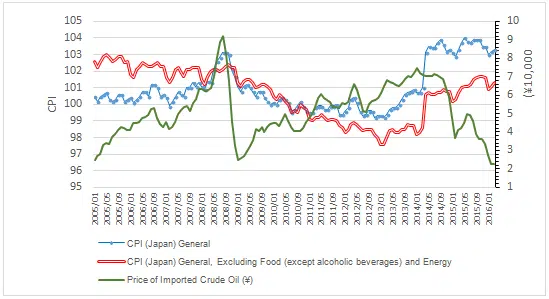
Japan’s Double Economic Whammy


Background

In February 2016, the Bank of Japan (BOJ), in order to reach a 2% inflation target, initiated a negative interest rate policy by increasing massive money supply through the purchase of long-term Japanese government bonds (JGBs).

This policy flattened the yield curve of JGBs. Banks started to purchase government bonds less frequently, because of the negative yield for both short-term government bonds and even for long-term government bonds up to 15 years.

Published
Categorized as Japan

Where will a Cabinet Shuffle Lead Indonesian Democracy?


Joko Widodo’s (Jokowi) victory in the 2014 presidential election was celebrated as it represented a major step forward for democracy in the world’s largest Muslim-majority country. Jokowi’s rise to power was unprecedented.

It was largely the collective effort of volunteers and a strong social media presence, which helped overcome his humble persona and highlight credible achievements during his term as mayor of Solo and Governor of Jakarta. This inspired high expectations that he would be able to enact much-needed political and economic reforms as president.

Published
Categorized as Indonesia

Africa Still Struggles with Miners Versus Farmers


The interaction between artisanal (small-scale) mining and agriculture in Africa still needs to be carefully considered by policy makers to ensure that people’s livelihoods and countries’ export revenues aren’t threatened. It’s also important that the relationship between the two sectors be optimised to mutual benefit.

Published
Categorized as Africa

There is Something in the Water in China


Water and energy are indispensable inputs to modern economies. However, in China these are both under threat. China’s per capita quantity of fresh water is only one-quarter of the global average and its sparse water resources are unevenly distributed across the country.

At the same time, China faces serious energy pressures due to the dominance of coal in energy consumption, causing severe environmental crises and its high external energy dependence in general.

Published
Categorized as China

Jokowi’s Mulyani Appointment a Step in the Right Direction


Once again, President Joko Widodo has reshuffled his cabinet. One pleasant surprise is the return of Sri Mulyani Indrawati, who until recently was Managing Director and Chief Operating Officer of the World Bank. She accepted the offer to serve as the Minister of Finance, replacing Bambang Brodjonegoro who now leads the Ministry of Planning.

Published
Categorized as Indonesia

The ‘Dangerous Populist’


The new Philippine president is waging a tough drug war, pushing economic growth domestically and greater pragmatism in foreign policy that could contribute to Southeast Asia’s future.

Stabilizing Philippine Economic Growth from the Bottom Up


The local business community is upbeat with the passing into law of Republic Act 10744, otherwise known as the Credit Surety Fund Cooperative Act of 2015 on 6 February 2016. Essentially, the said law provides for the creation and organization of the Credit Surety Fund (CSF) cooperatives to manage and administer credit surety funds and to enhance the accessibility of micro, small, and medium-sized enterprises (MSMEs); cooperatives; and nongovernment organizations (NGOs) to bank credit facilities.