The Congo and the Cold War


During World War II the US sought to secure all the uranium from the Shinkolobwe mine in present-day Democratic Republic of Congo for its atomic bomb project. The ore was the richest in the world. The US, determined to prevent any of it reaching Nazi Germany or later falling into the hands of the Soviet Union, took every precaution – including dispatching spies – to secure the supply of uranium. The story of this race for the ore is told in a newly published book, Spies in the Congo.

Published
Categorized as Congo

How will Africa Handle New Trade Deals?


The last few months have seen some significant developments for African trade and integration. These advances come at a crucial time for African countries, which have been particularly hard hit by the slump in commodity prices, China’s economic downturn, and higher external borrowing costs. This has resulted in slower GDP growth than expected, currency fluctuations and reduced investment – particularly in resource-rich countries.

Published
Categorized as Africa

Encouraging Japanese Board of Director Diversity


The current potential growth rate of the Japanese economy is estimated to be less than 0.5 percent. Given Japan’s rapidly declining working-age population, it will be critical to increase the labour participation rate of women and elderly people in order to promote economic growth. The ‘new three arrows’ of Abenomics stress the need for Japan to ensure the ‘dynamic engagement of all citizens’ in the economy.

Published
Categorized as Japan

Is China’s World Order Role Exaggerated?


China’s status within the prevailing global order has sparked one of the most contested debates in international affairs. For some, it evokes their worst fears over a rising revisionist power; for others it creates inflated expectations over what the Chinese leadership is willing to commit to within the global arena.

Published
Categorized as China

UK Manufacturing’s PMI Upside Surprise


The new month has begun with a couple of surprises.  The biggest surprise has been the record jump in the UK manufacturing PMI to 53.3 from 48.3.  A much smaller rebound was expected in August after the Brexit shock drop in July.

Can Thailand’s Latest Constitution Last?


The result of the Thailand’s recent referendum appeared to show an easy win to the ‘yes’ camp. Sixty-one percent of voters approved the draft constitution while 39 percent voted ‘no’. Fifty-eight percent also approved a second question, inserted at the last minute, on whether a non-elected prime minister could be appointed by a joint sitting of the Senate and House of Representatives.

Yet the result of the referendum is less conclusive than it would appear.

Published
Categorized as Thailand

Old Urbanization Patterns Won’t Help a New China


China’s unprecedented growth since reforms began in the late 1970s has been accompanied by an equally transformative process of urbanisation. China’s urbanisation rate increased from 17.9 to 54.8 percent between 1978 and 2014, which represents the largest peacetime population movement in human history. The transfer of labour from the agricultural sector and rural areas to non-agricultural sectors and urban areas in China underwrote the world’s fastest sustained period of economic growth in the past three decades.

Published
Categorized as China

Complex, Obscure Financial Transactions behind 1MDB


Malaysia’s 1Malaysia Development Berhad (1MDB) scandal reached a crescendo in July 2016. The US Attorney General claimed that more than US$3.5 billion belonging to 1MDB was ‘allegedly misappropriated by high-level officials of 1MDB and their associates’ between 2009 and 2015. The case is officially closed in Malaysia, but Prime Minister Najib Razak’s difficulties remain.

Published
Categorized as Malaysia

Indonesia’s Jokowi Relying on Military Leaders


Without networks within the military, and having no effective power over the political parties, President Joko Widodo (Jokowi) has been constrained in his political manoeuvres. To combat this, Jokowi has installed retired army generals to important civilian posts as coordinating ministers, defence minister and head of state intelligence.

The inclusion of a considerable number of former military officers in his administration has been Jokowi’s way to balance the influence of the oligarchs that supported him during his presidential campaign.

Published
Categorized as Indonesia

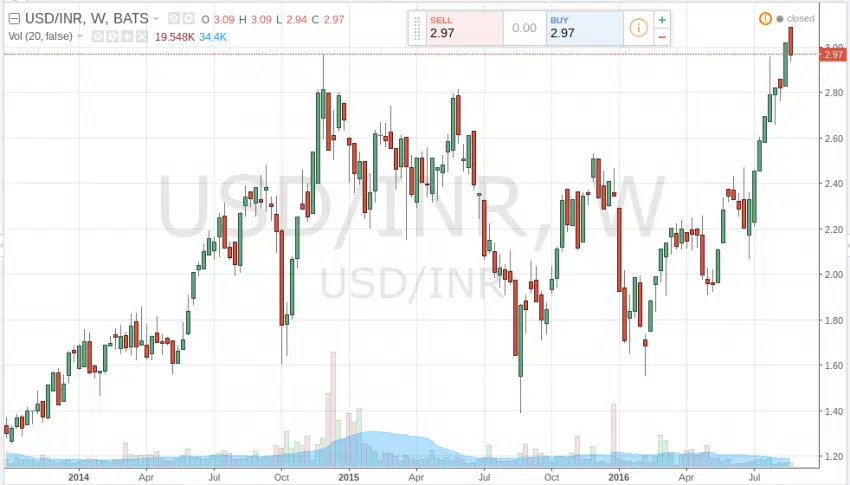
Will India’s Monetary Policy Continue to Weaken Rupee?


During the second bi-monthly monetary policy decision in August this year, the Reserve Bank of India maintained the policy repo rate under the liquidity adjustment facility as unchanged at 7.25%. As a consequence, the reverse repo rate against the liquidity adjustment facility will remain unchanged at 6.25%.

Published
Categorized as India