

Migration, Displacement and Human Mobility and Our Future


One possible future – a glimpse of our children’s fate if the climate keeps changing faster than our efforts to address it. Submerged countries. Abandoned cities. Fields that no longer grow. Political disruptions that trigger new conflict, and even more floods of desperate peoples seeking the sanctuary of nations not their own.
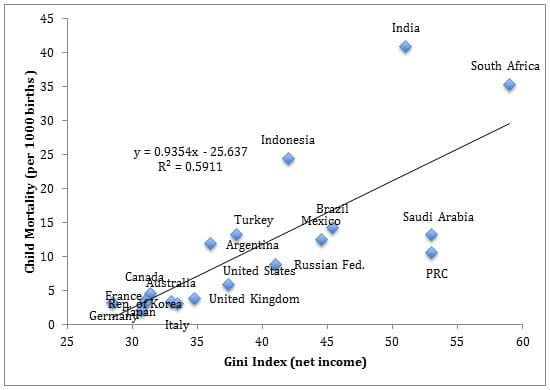
Income Equality Equals Good Health among G20 Countries


The G20 leader’s summit took place in November in Istanbul, Turkey. The emphasis of Turkey’s G20 presidency this year is on “inclusive and robust global growth.” Turkey recognizes inequality as a major problem within countries as well as across national borders and stresses the need for reducing inequality in order to achieve mutual growth.

One Belt, One Road, Big Ambition


China’s One Belt One Road (OBOR) initiative is an incredibly ambitious undertaking — and perhaps Beijing is only starting to realise just how ambitious.

EMU GDP Details Reveal Weak Euro Factors


The US dollar is firm against the dollar-bloc currencies, and sterling, but is heavier against the euro and yen.  The 13th consecutive year-over-year decline in China’s imports helped keep the pressure on the commodity producers.  Despite New Zealand reporting strong Q3 manufacturing sales (3.5% vs. -0.2% in Q2), the pendulum of market expectations have continued to swing for a rate cut later this week. 

Malaysia as ASEAN Chair Comes to an End


Malaysia ended its chairmanship of ASEAN as the grouping announced the establishment of the ASEAN Economic Community (AEC) in November 2015. The AEC intends to create a single market across the ASEAN region by standardising economic regulations including those on trade, flows of financial capital and labour migration. Malaysia is one of a few ASEAN countries that have pushed most strongly for initiatives to enhance intraregional economic cooperation. However, there may be cause for disappointment in what Malaysia has achieved as ASEAN’s chair.

Last Week’s ECB Market Reaction Unwinds


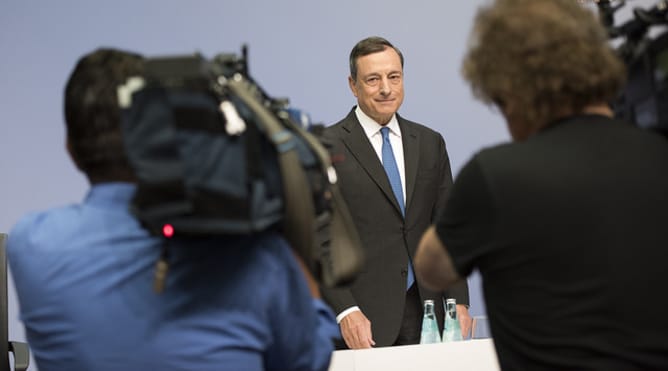
The exaggerated response to last week’s ECB meeting continues to unwind.  Draghi’s dovish comments and the strength of US employment data have helped keep the divergence meme front and center. 

The Big Market News Week Lives Up to the Hype


China joined the SDR, with a weight that puts it in third place behind the dollar and euro.  The ECB did ease policy. It delivered a 10 bp cut in the deposit rate (now -30 bp), extended its asset purchase program for six months (to March 2017), broadened the range of assets that can be bought to include regional bonds, and declared intentions to reinvest maturing proceeds.

Do Diverging Monetary Policies Matter?


The prospect that the central banks of the US and the Eurozone will soon make opposing moves on policy rates has allowed financial markets once again to demonstrate their neuroses. Some market participants are expecting exchange rate turmoil – but while this may always make good copy, it does not always follow from good analysis.

China’s Rise Entails New Regional Security Costs and Benefits


Recent tensions over maritime territorial disputes in the South China Sea have highlighted the lack of consensus over the existing security order in Asia. Understanding China’s perception of the Asian security order is crucial to find innovative policy solutions to enhance security cooperation. So how does China conceptualise the current security order and what do we know of its vision for the future?

Latest Jobs Data Won’t Deter the Fed


After the ECB’s disappointment yesterday market nerves were shattered, but the largely as expected US jobs data may help the focus return to the underlying fundamental fact.  The ECB just eased policy.  Not as much as the market expected, and that speaks to market positioning, but it did ease.  And the 211k increase in November jobs, with the October series being revised up 27k to 298k, Fed officials looking for more improvement in the labor market got it.
