Why 2016 Presidential Candidates Should Talk About ‘Classes’


In the 2016 presidential race, candidates from both major parties are looking for ways to address inequality.

Partly, they must do so because seven years after the 2008 crash, many Americans still are not getting ahead, according to several analyses by the Economic Policy Institute think tank. In fact, that is nothing new. Factoring in inflation, wage growth has stagnated for the bottom 90% of Americans since 1979.

Central Bank Monetary Policies Going Their Own Way


The US dollar remains bid.  Yellen’s comments and the Beige Book signal that the Federal Reserve is still on track to raise rates this year.  In contrast, as the Draghi will make clear today, the ECB is committed to completing its unorthodox easing. 

Yesterday the Bank of Japan trimmed its inflation forecasts.  It no longer expects to hit its target until after 2018.  Many continue to expect the BOJ to provide more stimuli.  Derision met the news that China’s GDP expanded by 7% last quarter.  Expect more stimuli from the PBOC.

Africa as a Teaching Tool on Austerity and Structural Change


Some have asked what Africa can learn from Greece.  I argue that Greece (and others) can learn a lot from the African experience.

Debt is on the rise again not just in Greece, but also across the world. A decline in commodity prices with a strengthening of the US dollar makes debt unsustainable in many economies. These developments have led to rising proportions of government revenues being spent on debt servicing and debt accounting for higher and higher proportions of total GDP.

The UK’s National Living Wage Plan: Pay Increases and Job Losses


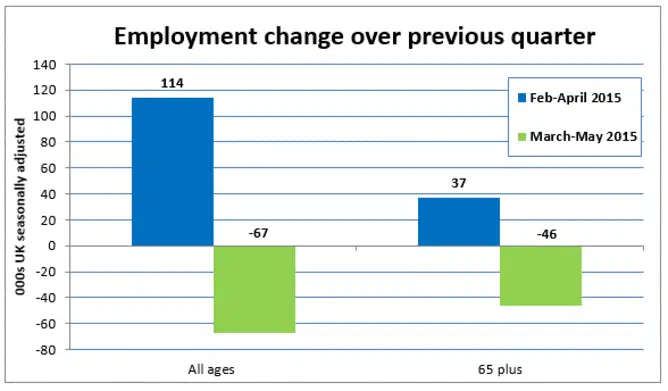
We have become used to living with the productivity puzzle but the labour market figures released today now add a labour market conundrum. The total number of people in work fell by nearly 70,000 comparing the three months to May 2015 with the previous three months – the first significant dip in the figures since 2010. But why? We would normally associate sharp falls like this with the onset of recession, and there is absolutely no sign of that.

Published
Categorized as Employment

Yellen Moves Yields


Those regional Federal Reserve banks that want to hike the discount rate are gradually increasing.  Last month, the Richmond Fed joined four other regional Fed banks (Dallas, Kansas City, Philadelphia, and Cleveland). 

The New Development Bank is a Linchpin for the BRICS’ Countries


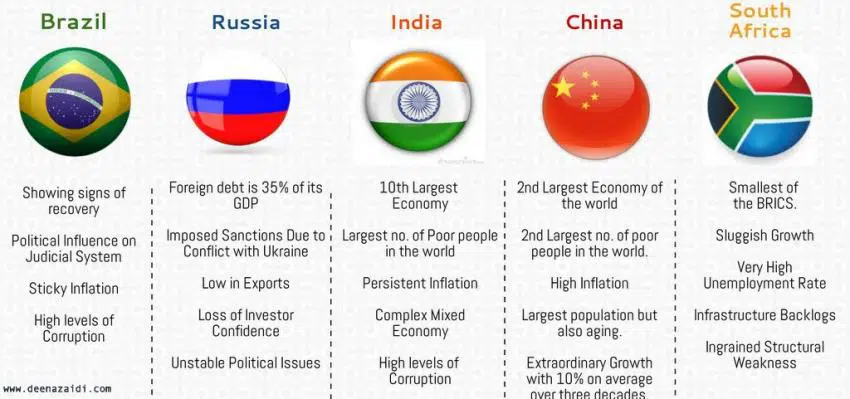
Greece was the first non-member to be offered BRICS membership, even though ironically the association of the emerging economies is yet to take off. The New Development Bank (NDB) operated by the five member-countries of Brazil, Russia, India, China and South Africa (BRICS) is all set to take off with an intention to develop economic relations amongst developing countries. It is considered to be an important institution since it is the first to be created by emerging countries with the hope to finance many important projects.

European Nations at Loggerheads over Migrants


The financial woes in Greece are not the sole crisis dividing European states. Tensions over how to deal with thousands of migrants landing in the Mediterranean have spilled over as domestic political pressures threaten ideals of unity. Angela Merkel calls it “the biggest challenge in European affairs” in her time as chancellor.

U.S. Retail Sales Slow as Economic Recovery Stutters


American consumers are spending less on retail products and services, as confidence in the economic recovery weakens and consumers keep their pocketbooks closed.

In total, retail sales fell 0.3% from May to June on a seasonally adjusted basis, despite expectations for a rise in spending. The Census Bureau released a new report that showed total retail spending has fallen slightly, although it remains up very modestly on a year-over-year basis. Compared to June 2014, retail sales were up 1.4% this year, although that increase was much weaker than economists’ expectations.

Could the Rise of the BRICS Countries Promote Global Capitalism?


The global recognition of the economic prowess of the BRICS – Brazil, Russia, India, China and South Africa – has led to the group gaining greater global political influence. But it has also reinforced the regional leadership standing of these nations.

The rise of the BRICS is a story of regional economic powers becoming increasingly important global political actors. With the promise of new global financial institutions to rival the Bretton Woods institutions, we stand on the cusp of a new era of multilateral economic and development politics.

Have $100 to Spend? Consider Mississippi


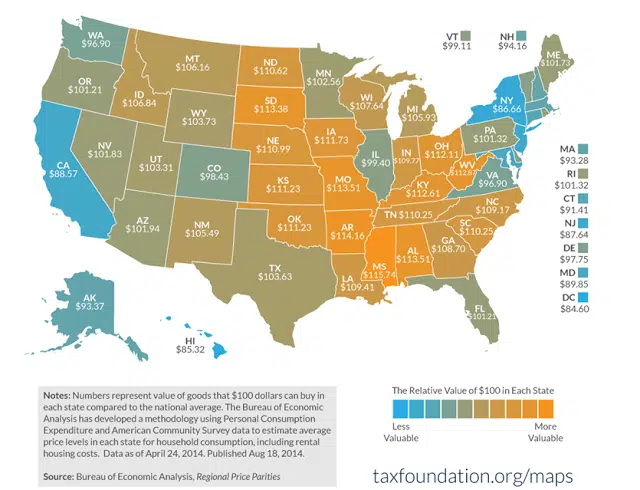
It is quite clear that a euro in Germany is not the same as a euro in Greece or Cyprus or even France. This disturbs many people who believe the having a single currency for such diverse countries does not make sense. Moreover, the exchange rate needed for less competitive countries with in the Eurozone is lower than in the more competitive parts.