Productively Measuring Productivity


Productivity seems to be one of the measures the Federal Government is using to justify its policy decisions in the lead up to the budget.  The Prime Minister Malcolm Turnbull invoked this little understood term in relation to the bill to resurrect the Australian Building and Construction Commission.

He said:

The New 65 is not the Old 65


The populations of most countries of the world are aging, prompting a deluge of news stories about slower economic growth, reduced labor force participation, looming pension crises, exploding health care costs and the reduced productivity and cognitive functioning of the elderly.

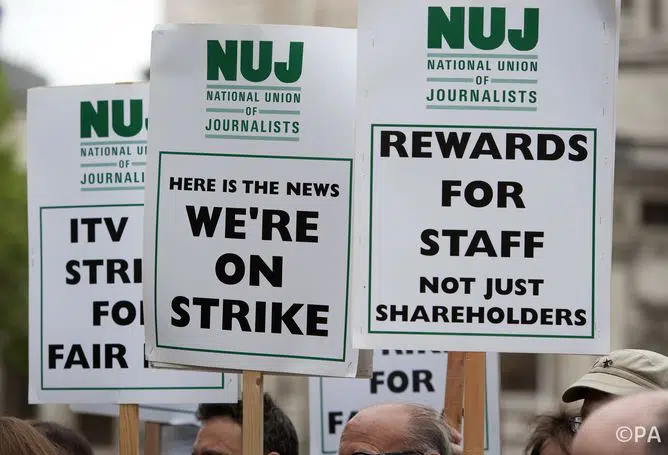
Altering the Employee/Employer Power Ratio for Productivity Gains


The UK’s employment rate is at a record high. The latest figures from the Office for National Statistics show that unemployment in the UK fell by 60,000 between October and December 2015, with the highest number of people in work since records began in 1971.

Global Productivity is not a Level Playing Field


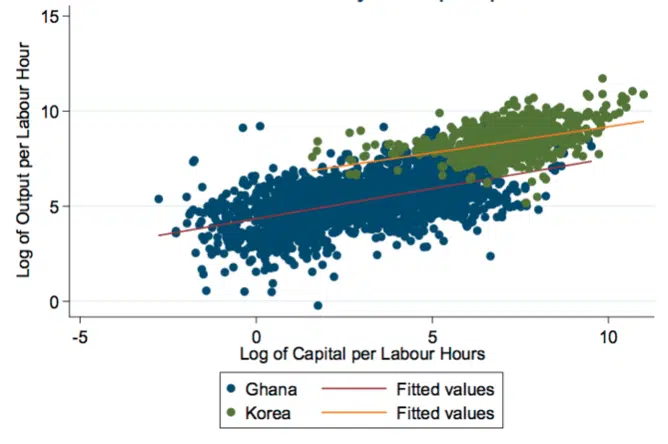
In the 1950s, Ghana was twice as rich as South Korea. By 2011, the most recent year for which data is available, South Korea’s income was more than ten times higher than Ghana’s.

Yet these differences in productivity between the overall economies of the two countries are modest compared with the differences that appear to exist in the productivity of their manufacturing firms. My colleague Simon Baptist and I set up such a comparison and were surprised by the size of these differences.

Boosting Productivity by Engaging the Workers


Britain has a productivity problem. Its relative standing in the international league tables has been in decline since the 1870s when it was in pole position. But the big change was in the 1970s when most Western European countries overtook us.

Why is the UK’s Work Capability Assessment Failing?


Many words can be used to describe failing policies – whether it’s a “toxic brand” or the “blunders of government”. Whatever words we use, though, there can be few policies that are more toxic than the Work Capability Assessment (WCA) – the test that determines whether disabled people can claim Employment and Support Allowance.

Infographic: Does Social Media Kill Productivity?


For all its merits, social media distractions costs the American economy $650 billion in productivity losses each year. For students, it is estimated that social media distractions occur every 10.5 minutes, with the average college student spending more time on social media sites than on studying

Infographic: How Useful is an iPad when it Comes to Learning?


Tablets are ultra portable tools that create flexible learning environments and provide an instantaneous access to information, but can they help give job seekers and students gain a competitive edge by helping them learn new skills?

In the current job market, learning new skills can be a valuable advantage for job seekers. The good news is, advances in technology have improved the learning process tremendously, making education more affordable, accessible and portable.

Would a tablet be suitable for you? Find out more with this infographic. 

Infographic: Are Americans Workaholics?


Whether it is to get a promotion, or to simply pay the bills, Americans workers put in some of the longest hours at work. However, how can we draw the line between productivity and workaholism, and how does the latter affect one’s health?

Since 1950, the average productivity per American worker has increased by 400 percent, but this achievement has come at a huge cost. As the following infographic will explain, workaholism has been linked to an increase in stress-related health issues, as well as a rise in marital problems.

Infographic: Email Overload


Is it possible to work without email? Or has email become such an important tool of communication in this age of globalization?

Last year, Thierry Barton, CEO of Atos, an information technology services giant, declared an internal email ban saying ‘it is not normal that some of our fellow employees spend hours in the evening dealing with their emails.’

Barton, who himself has not sent an email in three years, further said ‘email is not longer the appropriate (communications) tool’.