
Union Membership Declines to Lowest Point since the Great Depression


A continuing decline in union membership now means that there are less union workers in the United States than at any point in history since World War II.  Union membership fell to 11.1% of the total number of wage and salary workers in the U.S. as part of a trend that has been continuing since 1980, according to a new study by the Bureau of Labor Statistics (BLS).

The Latest from the Emerging Markets


1) Korea’s Financial Services Commission will introduce a so-called “omnibus account” for foreigners investing in local stocks, 2) Malaysian Attorney General Apandi Ali closed the investigation into transfers of foreign money into Prime Minister Najib Razak’s personal bank accounts, 3) The South African Reserve Bank increased the pace of its tightening, 4) The Egyptian central bank eased restrictions on dollar cash deposits, 5) The Turkish central bank raised its 2016 and 2107 inflation forecasts after the minimum wage was hiked 30%, 6) Brazil’s COPOM minutes c

IMF, World Bank Expect Emerging Market Defaults


The International Monetary Fund (IMF) and the World Bank are meeting to discuss providing billions of dollars in funding to avoid corporate defaults on a global scale.

Zimbabwe Falters amid Severe Drought and Mismanagement


According to the U.N.’s World Food Program, Zimbabwe faces a severe food shortage as a prolonged drought plagues the economy, according to Reuters. The Southern African nation faces its worst drought in 25 years while recovering from unprecedented levels of inflation that brought the economy to its knees five years ago. Zimbabwe’s agriculture sector comprises 30 percent of exports and 19 percent of GDP.

Asian Development Bank and IMF Singing Philippines Praises


Economic forecasting is always difficult. The American economist John Kenneth Galbraith famously said ‘we have two sorts of forecasters: those who don’t know and those who don’t know they don’t know’. Yet, while some sceptics assert that economic forecasts are of little value, they are useful for governments and firms to develop their plans and budgets for the year ahead.

Should a Slowing China be a Surprise?


After intensive industrialization, growth deceleration is natural. No nation has enjoyed sustained double-digit growth after industrialization. The real test of resilience is the continued increase of Chinese living standards.

Published
Categorized as China

What of Japan’s Abenomics Now?


We had been tracking the budding scandal that implicated the office of Japan’s Economic Minister Amari.  We had expressed our concern earlier this week that the scandal could sap Amari’s office strength and be a distraction.  However, the situation unraveled quicker than we anticipated and Amari resigned earlier today. 

Published
Categorized as Japan

Mortgage Applications Rise as Treasury Yields Fall


Despite efforts from the Federal Reserve to drive interest rates higher, lower expected borrowing costs and sliding inflation are lowering Treasury yields and may make mortgages cheaper.  Mortgage applications rose as interest rates fell, according to a new report by the Mortgage Bankers Association (MBA), which noted a 6.2% increase in total mortgage applications from the prior week.

The Markets Have You Down? Blame Anchoring Bias


It has been a shaky start to 2016 for global stock markets, with substantial falls across all international markets, followed by some weak rallies.

The overall decline has been partly blamed on the price of crude oil, which is hovering around US $30 a barrel down from $100 over a year ago, along with market fears on the overall health of the Chinese economy.

Published
Categorized as Markets

Making the Most of Africa in the 21st Century


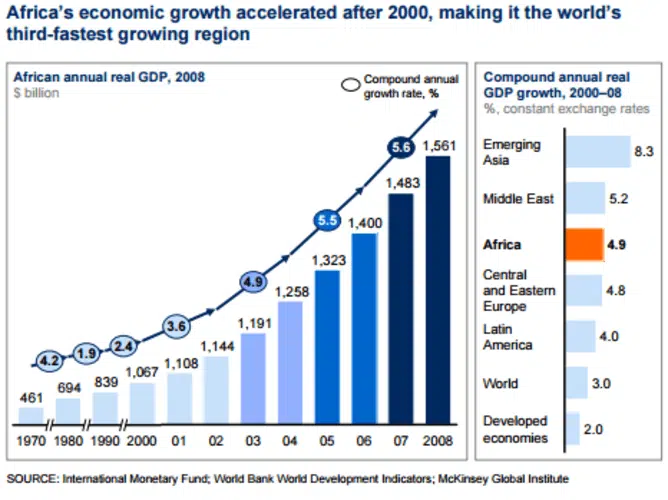
If the mass media is to be believed, Africa is hardly a continent brimming with opportunities for business. However, for some time international business commentators have been positioning the continent as the next market with significant potential. It is now often described as being ready to take on the mantle of Asia where growth is slowing, markets are becoming crowded and internal competition is becoming more severe.

Published
Categorized as Africa
