
U.S. Home Sales Jump Unexpectedly, Housing Prices Continue to Rise


Home sales and home prices are both rising, with sales showing a reversal of recent weakness that could indicate renewed strength in the American housing market.

Although economists warn that home prices are continued to price out a growing number of Americans, home sales rose 3.5% in February. Some parts of the country, however, are much weaker, as the Northeast saw a 0.2% decline in home sales. The Midwest was the strongest performer, with an 11.4% increase in sales. The South rose 2.1% from January, but actually fell from a year ago.

Japan’s Conspiring Demographics


Japan’s economy is stagnant and has been so for quite some time now. It looks as if Japan is now in the ‘upper income trap’. In comparison with its 10 percent real GDP growth rate between 1950 and 1960 and 4 percent growth rate between 1970 and 1980, Japan has only managed an average growth rate of 1 percent since the early 1990s. This declining trend has been driven by Japan’s considerable demographic challenges.

Published
Categorized as Japan

American Workers Earn More, Spend More


Personal incomes and spending are on the rise as higher oil prices boost costs and higher employment lifts wages.  A new study by the Bureau of Economic Analysis showed that personal income rose $23.7 billion in total, or 0.2%, in the month of February. At the same time, personal consumption expenditures (PCE) rose 0.1%, or were up $11 billion.

Act East, but Hurry


Since the turn of the 21st century, the Asia-Pacific region has become central to Indian strategic thinking. The Act East policy, unveiled by the Indian Prime Minister Narendra Modi in late 2014, reinforced this objective. Moreover, during his visits to Mongolia, Australia and at the ASEAN summit, Modi vigorously underlined how India’s destiny was tied to the future of the Asia Pacific.

Published
Categorized as India

Australia Spells Out South China Sea Policy


Australia’s 2016 Defence White Paper (DWP) directs Australia’s strategic attention towards maritime Southeast Asia. While the 2009 and 2013 Defence White Papers also focused on this region, the 2016 DWP bluntly expresses Australia’s concerns in the South China Sea. In addition, it inaugurates an assertive strategic policy that may have significant consequences for Southeast Asia’s security.

Published
Categorized as Australia

The European ‘Union’?


As the Eurozone is amid secular stagnation, its old fiscal, monetary and banking challenges are escalating, along with new threats, including the Brexit, demise of Schengen, anti-EU opposition and geopolitical friction. According to Dan Steinbock, Brussels can no longer avoid hard political decisions for or against an integrated Europe, with or without the euro.

Since 2010, European leaders have been deferring the hard decisions. Occasionally, there have been political reasons for delays. Yet, times of crises cry for leadership.

High GDP Growth Emboldens Optimists, But Job Data Remains Weak


A strong increase in America’s Gross Domestic Product supports optimistic forecasts for America’s economy, but weak jobs data indicates Americans are facing less job security than ever.

America’s GDP rose 1.4% in the 4th quarter of 2015, according to a new study by the Bureau of Economic Analysis. The third estimate for GDP was an improvement from the last estimate of 1.0% GDP growth, and is a result of stronger consumer spending in the American economy.

The UK Economy is Benefiting from EU Migrants


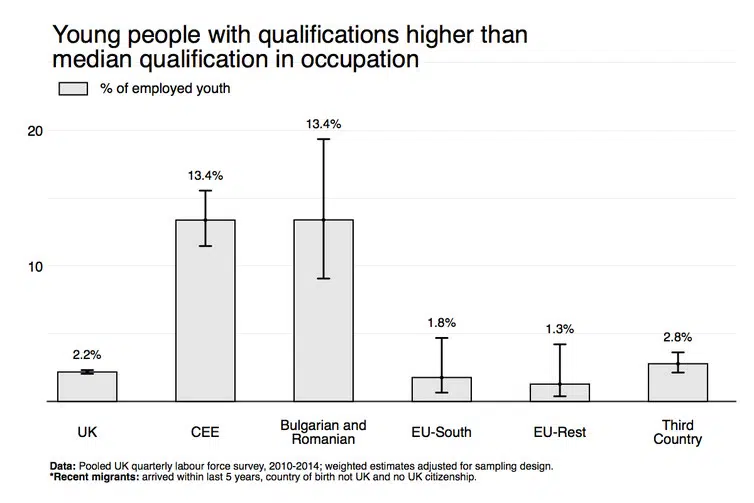
Migration and the principle of free movement within the EU is one of the main issues in the debate over whether Britain should remain in the EU. Polls suggest that the public is very sympathetic to the idea that the UK should restrict immigration and that it is the source of numerous problems. But why is this? In addition, are these fears justified?

Probably Not The Best British Budget


After a rollercoaster week for Britain’s chancellor, his eighth budget has been approved. George Osborne will be breathing a sigh of relief. After proudly announcing his budget on March 16, things began to unravel just 48 hours later, thanks in part to the shock resignation of the work and pensions secretary, Iain Duncan Smith.

The furor over plans to cut disability benefits brought about a farcical backtrack on the issue and an effective rewrite of large parts of the Budget. This script could have easily formed part of an episode of the political satire The Thick of It.

South Korea’s Government Tries to Get Ahead of Demographic Challenges


South Korea is undergoing rapid demographic ageing. Only 551,000 Koreans or 2.9 percent of the population were aged 65 or above when the Korean War broke out in 1950. However, according to the United Nations World Population Prospects (UNWPP), 6.4 million Koreans, or 12.7 percent of South Korea’s population, were aged 65 or above in 2014. By 2026 an astounding 10.7 million Koreans — 20.5 percent of the population — are expected to be aged 65 or above.
