
What’s Up in Emerging Markets


EM initially benefitted from the FOMC decision, but softened into the weekend.  One culprit was lower oil prices, as reports suggest an output deal is unlikely at the OPEC meeting this week in Algeria.  However, it wasn’t just EM, as the greenback closed firmer against the majors as well.  We still believe that risk and EM should do fine over the next few weeks, as the Fed set a two-month window of steady rates.

Is Japan at the End of the Monetary Rope?


Japan’s monetary gamble and Abenomics are approaching the end of the road. Neither Brussels nor Washington is immune to the adverse consequences of Tokyo’s monetary exhaustion, says Dan Steinbock.

Recently, Japan’s second quarter GDP growth was revised up to 0.7 percent, after four consecutive quarters of stagnation. However, don’t set your hopes too high.

Published
Categorized as Japan

Recession Recovery and the Tale of Two Dollar Rallies


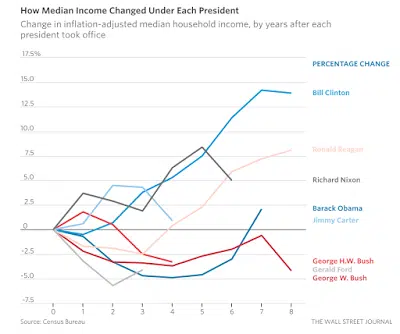
The dollar-value of all the goods and services the US produces has never been larger.  Two other metrics capture the recovery.  These two Great Graphics come from the Wall Street Journal and draw from Census Bureau figures.

A Missed Opportunity for Indonesia


As ASEAN meetings in Vientiane concluded in September 2016, an air of anxiety was already beginning to settle over the Southeast Asian nations. Further resistance against China’s maritime assertiveness in the South China Sea is proving increasingly futile.

Published
Categorized as Indonesia

Malaysia’s Next Election Sure to be a Bit of a Mess


On 29 June this year, Lim Guan Eng, the Chief Minister of Penang state and Secretary General of the opposition Democratic Action Party (DAP), was arrested and charged with two counts of corruption and abuse of public office.

Published
Categorized as Malaysia

China’s Growth Augmented by the Diaspora


In 1995, Australia’s Department of Foreign Affairs and Trade published a 350-page report on overseas Chinese business networks, calling them ‘one of the main forces driving the dynamic growth that characterises the region’. This interest reflected the economic clout of the then 50-odd million diaspora Chinese — living mostly in Taiwan, Hong Kong, Macau and Southeast Asia. In the early 1990s, this diaspora was described as rivalling Japan as a business influence across Asia, with a collective wealth comparable to China’s GDP.

Published
Categorized as China

China’s Eventual Leadership Role


For a great power to lead the world there are a few qualities that it should bring to the table. These include, but are not limited to, material strength, an aspiration for recognition, and sufficient international support. Does China currently possess these qualities?

Published
Categorized as China

A Malaysian Odd Couple


On Monday 5 September 2016, former Malaysian Prime Minister Mahathir Mohamad did the unthinkable. He turned up at the High Court for Anwar Ibrahim’s filing of an interim injunction to stop the enforcement of the newly passed National Security Council (NSC) Act.

Mahathir shook hands with his former ally turned nemesis and both exchanged pleasantries. He wished Anwar well and prayed for the jailed opposition leader’s success. They talked for a good 45 minutes in the witness room — a long time indeed for two bitter foes.

Published
Categorized as Malaysia

Mixed Results in the Rest of Asia over the BOJ’s Policy Decisions


Like other central banks in advanced countries, the Bank of Japan (BOJ) adopted an unconventional monetary policy after the 2007–2009 global financial crisis (GFC). After Prime Minister Abe advocated the new policy regime, Abenomics, the BOJ became highly aggressive in its unconventional policy (see, for example, Fukuda [2015] for details). On 4 April 2013, BOJ Governor Kuroda introduced quantitative and qualitative monetary easing (QQE) and committed to achieve a 2% inflation target in 2 years.

Published
Categorized as Japan

Teeing Up the Emerging Markets


EM ended last week on a soft note. Perhaps it was the North Korean nuclear test (see below).  Perhaps it was disappointment in the ECB or rising Fed tightening odds. Whatever the trigger was, EM FX weakness persisted and appears likely to carry over into this week.

Indeed, as the September 21 FOMC meeting approaches, markets are likely to get even more jittery and choppy.  Just to keep things in perspective, after Friday’s drop, SPX has retraced less than 38% of the big post-Brexit bounce and so this correction in “risk” could go on for a bit longer.