Should Trade Agreements Address Climate Change?


This month’s long-awaited release of the Trans-Pacific Partnership (TPP) text was the result of years of negotiations on trade ties between nations around the Pacific Rim.

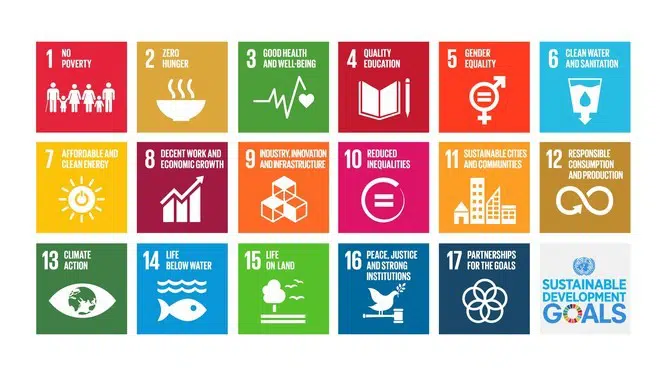
Some six weeks earlier, another set of deliberations came to an end as the United Nations unveiled its 17 Sustainable Development Goals (SDGs), which aim to eradicate poverty and reduce inequality by addressing critical issues such as food security, health care, access to education, clean and affordable water, clean energy, and climate action.
The UK Rolls Out the Red Carpet for India’s Modi


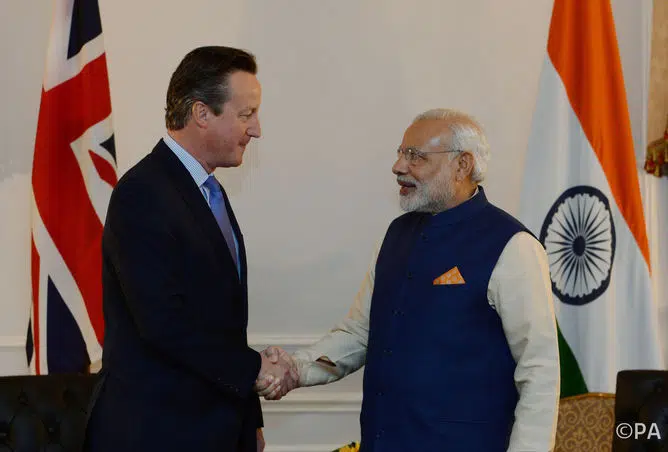
Narendra Modi, the prime minister of India, is in the UK from November 12 for a three-day visit. There is pressure on both India and the UK to sign a package of business deals to mark the occasion.

Diplomatic business. Stefan Rousseau / PA Wire/Press Association Images

The UK Going its Own Way with China


The lavish welcome laid on for Chinese President Xi Jinping in the United Kingdom in October 2015 provoked a surprising amount of criticism in the British and international press. Journalists talked of Prime Minister Cameron and Finance Minister Osborne’s ‘kowtow’, called it a national humiliation, and reported — or perhaps speculated on — ire from the US administration.

The FTAAP will be a Hot Topic at APEC


Most of what APEC will achieve in 2015 has already been achieved. The Economic Leaders’ Meeting in the Philippines on 18–19 November 2015 will endorse agreed upon measures. Leaders will talk — in various groupings — about whatever else interests them.

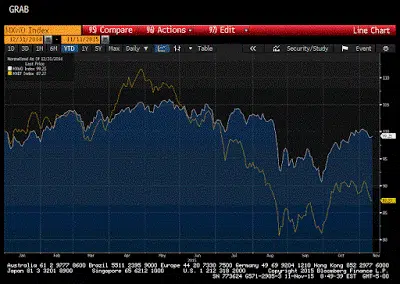
There is more than One Divergence Meme in the Market


The main divergence we have emphasized is in monetary policy trajectories.  The first phase, which began late last year and will run through this month, is other countries taking action to ease policy.  The Fed stood pat.  The second phase is when the Fed lifts rates and many others continue to ease, perhaps at an accelerated rate. 

Still Looking, but not Finding, the Game-Changing Data


The US dollar continues to consolidate its recent strong gains. Its pullback is shallow is corrective in nature. Nothing has materialized to challenge the divergence meme. The US 2-year premium over Germany has edged higher still today. It is a little more than 122 bp and it is extending its widening streak to the eighth consecutive session. Although the 10-year premium over Japan has not increased for two days, it is holding above 200 bp, a threshold it moved above at the end of last week for the first time since September 2014.

WADA Exposes the Doping, but Can Do Little to Stop It


It is hard to overplay the importance of the damning report from the World Anti-Doping Agency (WADA) that has presented evidence of widespread and systematic doping – particularly in Russia, which it recommends should be suspended from competition. The investigation has provided world sport with a long-overdue and historically significant moment of truth. The global response to this scandal could indelibly shape the nature of sport.

Following Turkey’s Lead


Turkey’s Prime Minister, Recep Tayyip ErdoÄŸan, has said to judge the G20 Summit in Antalya on Sunday 15 November based on three words: inclusiveness, implementation, and investment.

Some Recent Economic Developments to Ponder


The Swiss National Bank increased its ownership of US equities by about $350 mln in Q3 to $38.95 bln.  The SNB has a stake in some 2500 listed US companies.  The Russell 2000 was marginally lower in the quarter.  The SNB indicated that it increased its Apple stake to 10.3 mln shares from 9.4 mln in June.  It increased its exposure to ExxonMobil by roughly the same percentage (~10%) and increased its Microsoft stake by a little less (~9%).  Overall, the SNB, often regarded as a conservative central bank, has about 18% of its assets (~$546 bln) in equities. 

World Bank Warns that Climate Change Could Lead to 100 Million New Poor


Climate change has been on many people’s minds for the last few years, but few consider how it could affect the poorest members of society. A recent report by the World Bank cautions that climate change could push more than 100 million people into extreme poverty by 2030. This would be the result of disruptions to agriculture and the spread of disease, such as malaria.