
Businesses Highlight the Strengths of Autistic Employees


Microsoft has announced its intention to hire more autistic people – not as a charitable enterprise but because, as corporate vice-president Mary Ellen Smith said: “People with autism bring strengths that we need at Microsoft.” Employing autistic people makes good business sense.

Technological Advances are Changing the Banking Model


The banking sector has witnessed many technological changes in recent years that offer more personalized services.  The shift towards getting more digital just got more exciting with the introduction of many user-friendly technologies. As banks try to make banking quicker and secure, the option for digital innovations keeps getting more and more competitive. The first quarter of 2015 introduced some very interesting banking innovations that could revolutionize the banking experience for customers.

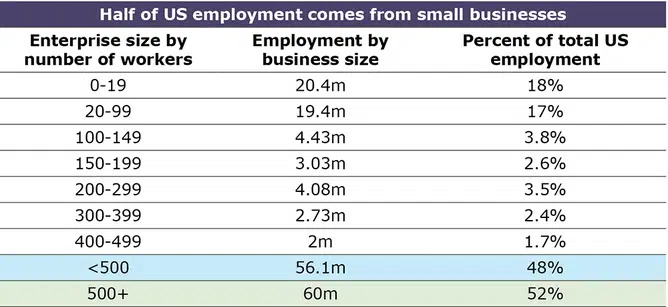
Large and Small Businesses Have their Place Driving Economic Growth


Last August, South Main Kitchen, a little restaurant in Alpharetta, Georgia, a small town outside of Atlanta, opened its doors near my wife’s office. Julie, and I, and our friend Mike, were the first ones on the scene and were quick to order a few drinks.

Low Oil Prices Spillover Effect Hits Energy Sector Debt and Equity Hard


Oil companies continue to get burned by low oil prices, but the pain is bleeding over into the financial industry. Major banks are suffering huge losses from both directly backing some struggling oil companies, but also from buying high-yield debt that is now going sour.

The Wall Street Journal reported that tens of millions of dollars have gone up in smoke on loans made to the energy industry by Citigroup, Goldman Sachs, and UBS. Loans issued to oil and gas companies have looked increasingly unappetizing, making it difficult for the banks to sell them on the market.

Published
Categorized as Energy

Oil Storage is Getting Creative and, in Some Cases, Expensive


Oil prices fell from the middle of last year through mid- to late-January.  They have been broadly sideways since.  The April light sweet futures contract has been in a $48-$55 range.  The April Brent contract traded in a $55-$60 range in the first half of February and moved into a slightly higher range $58-$63. 


Published
Categorized as Energy

Japan’s Abe Commits to Changing His Party’s Relationship with Deeply Unpopular Power Utilities


Japanese politics was dominated by energy in the wake of the disaster of 11 March, 2011. The decision to shut-down all the remaining 48 nuclear units introduced real concerns of brownouts, previously unthinkable in Japan’s gold-plated power system. The parliament commissioned the first independent inquiry in Japan’s postwar history, and gave it the task of finding out what happened, and how a similar event can be avoided.

Published
Categorized as Energy

ASEAN Internet Penetration is Uneven, but Growing Fast and needs Direction


ASEAN is at the moment drifting aimlessly in cyberspace. But it could take advantage of its own rapid growth in internet penetration and the harsh cyber-security lessons of other nations, to create an inclusive, coordinated and adaptive ASEAN Cyber-Resilience Blueprint — one that could be an international exemplar.

A Cyberspace Lesson from South Korea


Over 3 million South Koreans have downloaded a Germany-based smartphone messenger app, Telegram, while 400,000 users of Kakao Talk — the nation’s most widely used messenger app — terminated their account, in protest against government attempts to crackdown on dissenters.

Obama’s Net Neutrality Support Boosts $1.3 Trillion Industry


Barack Obama’s surprising support for net neutrality could help boost internet startup innovation, causing the online market to more than double in value by 2020.

Obama said earlier this week that the Federal Communications Commission should reclassify the internet as a Title II utility. Such a move would prohibit broadband providers from distinguishing between different types of data services, and restricting or slowing down access for some services over others.

Good News/Bad News from a Recession-Backed Energy Consumption Reduction


Readers of the Financial Times would have recently encountered a story that encompasses the paper’s version of bad/good news when it comes to the oil business. According to the author Daniel Yergin, the bad news is that several major oil exporters are suffering from insurrection and civil war, which threatens global supplies. But, there is also good news:

The sum of these risks is trumped by the old-fashioned forces of supply and demand. While there may be a surplus of geopolitical risk in the world, there is an even greater surplus of oil.

Published
Categorized as Energy