
From Manufacturing to Construction, U.S. Shows Signs of Recovery


After an initial quarter of negative growth in the U.S., new economic data indicates a seasonal pickup began in spring.

From manufacturing activity to construction spending, and from personal income growth to purchasing power, the U.S. showed signs of rebounding strength, after posting a 0.7% GDP decline in the first quarter. That fall stunned economists, many of whom predicted more than 1% annualized growth in the period, as port closures on the west coast and cold weather stifled activity throughout the country.

Personal Income Rises
European Economy Showing True Strength


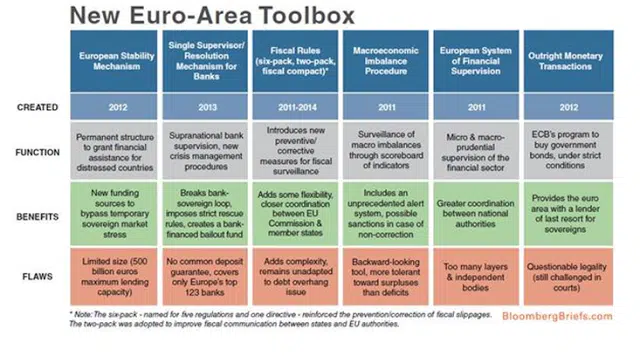
Europe’s economic recovery is gaining momentum, leading to a more positive outlook for the region’s long-term financial prospects. According to Barron’s, gross domestic product (GDP) in the European Union should grow by 1.8 percent in 2015 and 2.1 percent in 2016, and each member state of the EU could see average growth around 1.5 percent.

A Preview of Emerging Market News and Events


EM assets are starting the week off on a soft note, picking up where we left off last week.  The usual culprits can be cited:  firmer US dollar, softer commodity prices, global growth slowing, and Fed tightening concerns.  However, the recent EM pattern of weaker currencies and firmer equities has paused for now, with both selling off in recent sessions.  If MSCI EM closes down today (it is currently flat), it would be the 6th straight down day and 10 of the past 11.  Right now, it is testing the 200-day MA near 1000, and a break below 987 (62% of the March-April ri

An Emerging Markets Status Update


1) Brazil’s Senate finally approved the much discussed fiscal measure, 2) Poland’s ruling party lost control of the presidency, 3) The conflict in the South China Sea is heating up again, 4) The key JPY/KRW cross has fallen to its lowest level since early 2008, 5) Russia and Venezuela signed a $14 bln investment deal

Singapore Economy Surpasses Expectations in the First Quarter


Singapore’s economy grew 2.6 percent in Q1, a boost from 2.1 percent from the last quarter. GDP also rose to an annual 3.2 percent in the first few months, exceeding a previous government forecast of 1.1 percent in April. The increased growth is attributed to stronger exports and increasing U.S. demand.

India PM Modi’s Reforms are Gaining Traction, but the Road is Long


There is no doubt that Modi works hard and drives his government at a similar hectic pace. Midnight oil is burnt regularly in the Prime Minister’s Office, which now resembles an omnipotent and omnipresent command station.

Under Modi, the economy has improved. Inflation is down and the growth rate is up, though marginally. Foreign reserves are higher, and current account and fiscal deficits have been reined in. A number of investment projects have also been cleared and new ones announced, especially in the public sector.

Published
Categorized as India

Could India be the New Economy to Watch?


The International Monetary Fund (IMF) has released an estimate that places India’s growth for 2015 to 2016 at an astounding 7.5 percent. That puts India’s growth slightly higher than China’s. Many investors had overlooked India, assuming its outrageous deficit spending would hamper its economic growth, but it seems to have had little or no negative consequence yet. This leaves many in the financial industry asking if India is the best emerging economy in which everyone should invest.

History

Greater Integration Through Crisis


The pre-Socratic Heraclitus was the philosopher of change.  He wrote, “no man steps in the same river twice; for it is not the same river and he is not the same man.”  Truth that.

Chinese Equities Turn Lower and the Reasons Rush In


The US dollar is mixed after making new multi-year highs against the yen near JPY124.30 in Asia, while month-end positioning appears to have helped fuel an extension of the euro’s recovery that began in the North America yesterday.  The lack of an upward revision to UK Q1 GDP kept sterling’s upside correction muted. 

Published
Categorized as Markets

Short-term Memory Loss is Dangerous in the Financial Markets


Something happens between the bubbles, bailouts, boom and bust cycles that we can’t afford to ignore, and it’s happening right now in the US and Europe. It is a kind of collective amnesia that lulls investors into forgetting exactly what and who caused the last financial crisis.

Published
Categorized as Markets
