
Jobless Claims Fall, Services Turnover Rises


People are spending more on services and less jobless claims hint at a recovering American labor market.  Initial weekly jobless claims fell from 18,000 to 259,000, far below expectations of a 5,000 drop to 272,000. Continuing claims also fell slightly, as 2.225 million unemployed workers in the United States continue to request help, as they cannot find work. Initial claims fell to the lowest point since October 2015, after several weeks of broad increases. The 4-week moving average for initial claims fell to 267,500.
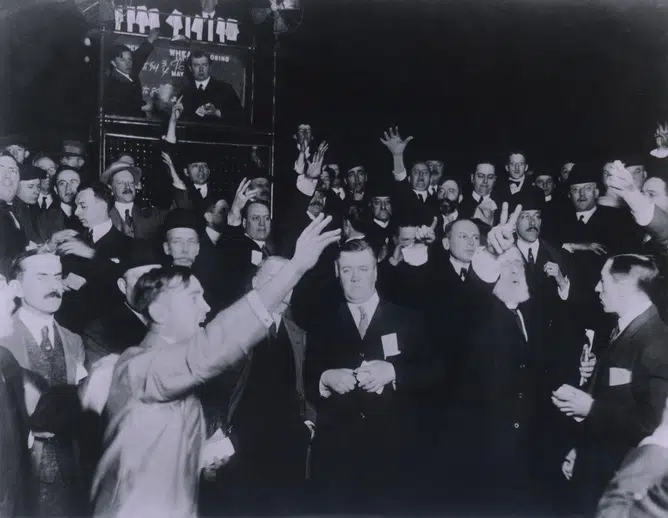

Is Improving Gender Equality on Wall Street the Key to Fewer Market Crashes?


While the scenes depicted in the film The Wolf of Wall Street might be extreme, they do reflect a truth: that the world of finance is overwhelmingly male. It is this male-dominant culture, fuelled by testosterone that has been blamed by regulators, academics and the popular press for instability and crashes in the financial markets. Moreover, with reason.

Published
Categorized as Markets

Japan’s New Foreign Aid Policy Breaks with Tradition


The usage of aid solely to support economic development and not for strategic reasons has been the bedrock principle of Japan’s aid policy since the country first began providing foreign aid to developing countries in 1954. Japan’s Official Development Assistance (ODA) Charter unequivocally declared a total prohibition of ‘any use of ODA for military purpose’. However, the ODA’s replacement, the Development Cooperation Charter introduced in February 2015, emphasises balancing security and development.

Published
Categorized as Japan

Markets Reel on China Exports Crash, IMF Cautions


American and Chinese markets suffered a setback after Chinese exports plummeted by over 25%.  Exports fell by 25.4% according to official figures, while imports fell by over 14%. Both numbers are the worst seen since 2009, as Chinese consumers spend less and Chinese companies find less opportunities to sell to foreign firms.

The decline drove the International Monetary Fund (IMF) to issue another warning on global growth—the recent of several in the last few years.

Hitting a New Growth Target


China’s new growth target of 6.5-7% will ensure more flexibility amid deceleration at home and stagnation in the West. It is a balancing act between reforms and deleveraging.              

Published
Categorized as China

Forces Impacting Chinese Trade Figures


Investors are skeptical of Chinese economic data.  However, news yesterday that Chinese exports fell by a quarter in February shocked investors.  Many worry about the implications not just for China, but also for world growth.  It comes as the IMF is signaling it will likely cut its 3.4% global growth forecast next month.

Published
Categorized as China

U.S. Small Business Sentiment Softens


Across America, small businesses are feeling less confident about their future businesses and the economy as a whole.  The NFIB Small Business Optimism Business Index fell 1 point to 92.9, its lowest point in two years. The survey, which asks small business owners general questions about their attitude towards their own futures and the future of the economy from various perspectives, resulted in an increasingly negative index reading from January.

China’s ‘Market Economy Status’


The future of the EU–China trade relationship — one of the largest in the world — will be substantially impacted by a debate over whether China should be granted ‘market economy status’ (MES) this year. Under the terms of China’s ‘Protocol of Accession’ to the World Trade Organization, WTO members are allowed to treat China as a ‘non-market economy’ until December 2016. After that time — at least in the Chinese interpretation — WTO members are to accord China MES.

Published
Categorized as China

Recession Signals Sound as Credit, Labor Markets Weaken


Labor market conditions and consumer credit are weakening significantly, indicating recessionary pressures are hitting the United States.

The Federal Reserve released a report on the job market, and saw that conditions for workers have worsened significantly, falling to -2.4 from -0.8 in January. That tripling of the negative read was a significant surprise, as the Fed expected steady improvement in the job market after it raised borrowing costs on Americans in December by raising its Fed funds target.

Japan’s Slow Motion Crisis Response


In the face of the 2011 triple disaster, the residents of Fukushima banded together to manage the crisis. The word kizuna has become widely used to describe the people-to-people bonds underpinning the remarkable endurance displayed by the residents of Fukushima. Kizuna refers to the strength of Japanese society. It signifies the ties that bind people together and thus Japan’s intangible social resources.

Published
Categorized as Japan