Retail Sales in the US and Macro Developments in Europe Highlight Today’s Session


The US dollar has largely been confined to yesterday’s ranges, as it consolidates recent gains.  Today’s March retail sales report in the US is important.  Retail sales have fallen three consecutive months.  Ideas that this weakness was a function of two transitory forces will be tested.  Those forces are the poor weather and the pullback after the biggest shopping spree in a decade (Q4 14 consumption component of GDP). 
Ending the Corporate Income Tax to Boost Wages


Workers’ wages have stagnated, even as the unemployment rate has plunged to a seven-year low and the economy is bounding ahead. Some people propose raising the federal minimum wage and bolstering labor unions to address slow growth in wages.

Published
Categorized as Employment

U.K. Election Primer: Businesses Role


For seasoned observers of general election campaigns, it is not surprising to see the Conservative Party styling themselves as the business-friendly party. Traditionally depicted as “the party of the rich”, the Conservatives have never struggled to win the support of the country’s boardrooms and executive classes. Flaunting the support of FTSE 350 business leaders does not have the same weight as it did in years gone by.

China’s Collapsed Trade Surplus is Another Sign of a Slowing Economy


The broadly higher US dollar is extending last week’s recovery. In addition to the strong technical momentum, shockingly poor Chinese trade data is bolstering the greenback, which crushed currencies linked to commodities from Australia to South Africa to Latin America. The Russian ruble bucks the trend and extends its recovery, helped by the Brent testing $60 a barrel.

A Slew of Economic Data is Sure to Keep Market Participants Busy this Week


The key take away from recent developments is that the divergence theme that has lifted the US dollar remains very much in play even after the dovish spin given to the March FOMC meeting and the disappointing jobs data. The new cyclical low in the weekly jobless claims and continued improved in the JOLTS report give investors reasons to doubt that the weak job growth in March represents anything significant.

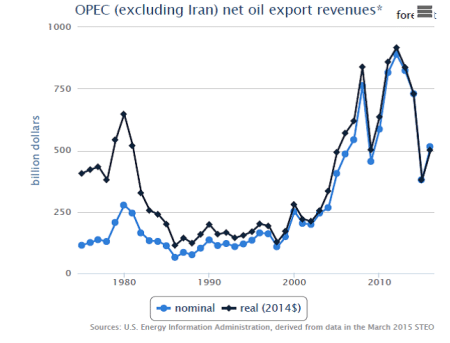
Are OPEC’s Days Numbered?


OPEC has been the most talked about international organization among investors, analysts and international political lobbies in the last few months. 

The Week in Review: Spending Falls, Investment Rises in China and U.S.


Weak fundamental data and rising savings and investment rates in the U.S. and China indicate recent trends towards economic improvement might be reversing.

American consumers are spending less and saving more.  Some interpret this as an indicator that aggregate demand is depressed and economic growth is set to slow. Others have noted an economic contraction in the first quarter may be a possibility due in part to exceptionally cold weather.  This is despite an easy comparison, noting that economic growth was sharply negative for the same period a year ago.

Eurozone Economic Data is Providing Positive Surprises


The market shrugged off Last week’s soft US employment data as a one-off disappointment.  The JOLTS report and new cyclical lows in weekly initial jobless claims provide evidence of the continued improvement in the labor market.  The ECB’s bond purchases are continuing to push down European rates while halfhearted reception to the US Treasury auctions this week has seen US yields rise.

Fed Minutes are Released and U.S. Corporate Earnings Season Begins


The US dollar is broadly higher on follow through buying after recovering in North America yesterday, helped in part by the FOMC minutes.  The minutes suggested a greater risk of a June or even a September hike than many investors seem to appreciate.  The December Fed funds futures contract, for example, has nearly unwound the move spurred by the disappointing jobs data at the end of last week. 

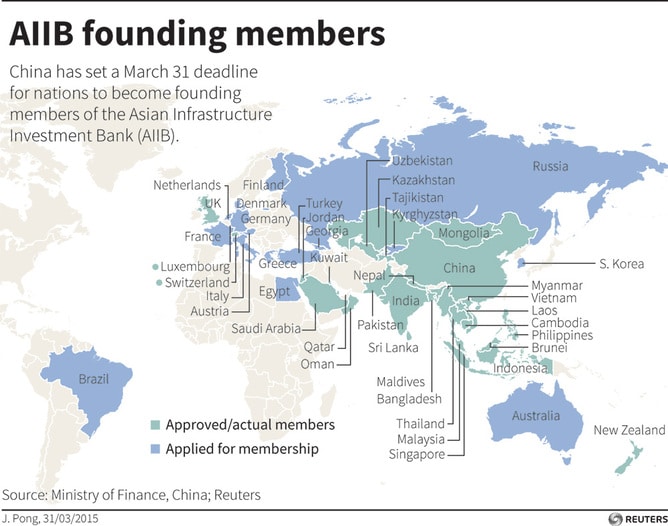
The U.S.’s Problem with the AIIB is the U.S.


China’s growing economic clout is complicating US efforts to maintain its grip on the world’s leading multilateral economic institutions – as it has done since the end of World War II.

The creation of the Asian Infrastructure Investment Bank (AIIB), established last year by China and many other Asian countries, has brought this challenge and how to address it front and center.